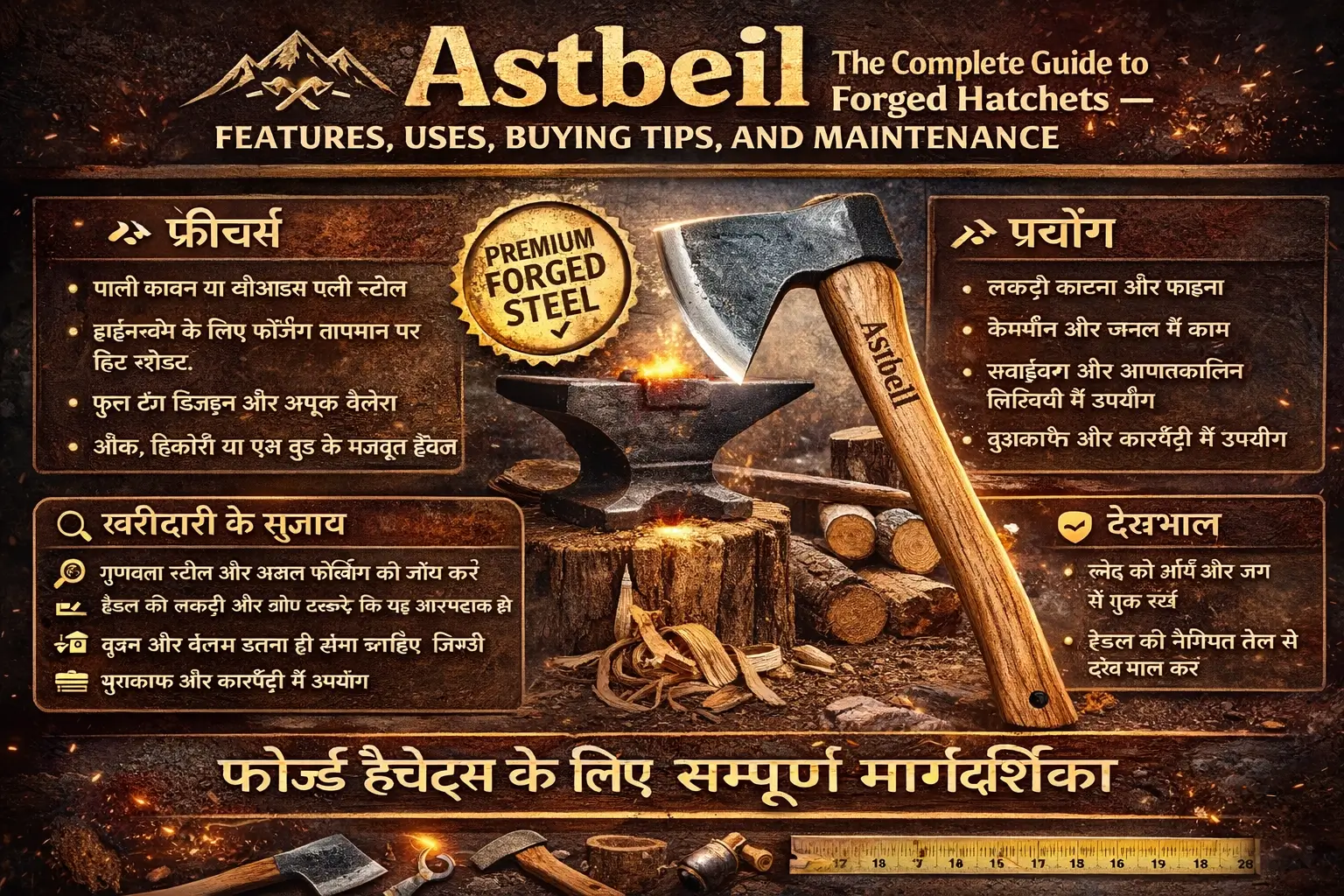
What Is an Astbeil? Understanding the Classic Hatchet Tool
The term Astbeil refers to a type of hatchet or hand axe designed for chopping, cutting, and shaping wood with precision and power. In German and Central European tool tradition, “Astbeil” is often used for forestry, construction, and general woodcutting tasks — especially when a smaller, more maneuverable tool is needed compared to a full‑sized axe.
At its core, an Astbeil is a single‑handed striking tool with a sharp blade on one side and a substantial head weight for impact. In tool classification, it sits between a large axe and a small camp hatchet, offering a balance of power and precision.
History and Evolution: From Hand Forging to Modern Craftsmanship
The history of hatchets and hand axes dates back thousands of years, evolving from primitive stone tools into highly engineered implements used across cultures for woodcutting, construction, and everyday survival.
In Europe, especially in Germany and Scandinavian countries, the craft of forging axes became highly refined over centuries. Traditional manufacturers such as Helko Werk, founded in 1844 in Germany, still produce high‑quality hatchets and axes that follow longstanding standards of craftsmanship and steel technology.
Another historic European brand, Ochsenkopf, has been producing quality timber tools with a forging tradition stretching back generations, focusing on combining steel hardness with durability.
Astbeil vs Axe vs Hatchet: What’s the Difference?
Although the terms are often used interchangeably, there are practical distinctions:
- Axe: A larger, two‑handed tool with a long handle for heavy chopping and felling big trees.
- Hatchet: A smaller, one‑handed axe used for splitting kindling, trimming branches, and light chopping work.
- Astbeil: In many German contexts, this refers to a forged hatchet — often with a slightly longer handle and optimal balance between power and precision.
Simply put, an Astbeil is essentially a well‑balanced, ergonomic hatchet designed to handle a range of tasks — from branch trimming to construction framing — without the bulk of a full axe.
Types and Variants — Which Astbeil Fits Your Needs?
Astbeils vary by head weight, handle length, and intended use:
Head Weight
- 1.0–1.2 kg (2.2–2.6 lbs): Ideal for chopping, splitting smaller wood, and general forestry work.
- 1.3–1.5 kg (2.9–3.3 lbs): Better for heavier cutting and small‑to‑medium firewood preparation.
Product examples from tool makers often list head weights like 1200 g and 1400 g, giving users options depending on how much momentum and cutting force they need.
Handle Length
- 700 mm (approx. 27.5 in): Common for workshop and construction tasks, offering balance and control.
- 750 mm (approx. 29.5 in): Offers more reach and leverage for heavier chopping tasks.
Longer handles generally provide more power but may be less agile in tight spaces. Matching handle length to intended tasks is key for comfort and efficiency.
Materials and Construction — What Makes a Quality Astbeil
A high‑quality Astbeil combines steel strength, ergonomic handle design, and secure head attachment.
Forged Steel Axle Head
The most durable Astbeils are forged from a single piece of high‑carbon steel (commonly C45 or C60 grade). Forging improves the grain structure of the metal, delivering toughness, impact resistance, and edge longevity.
Example: tools from traditional German manufacturers are forged from C60 steel for a balance of hardness and durability, often coated to resist rust.
Handle Materials
- European Ash: A classic choice for hatchet handles due to its resilience, shock absorption, and natural flex.
- Hickory: Another revered wood handle material offering excellent strength‑to‑weight ratio. Modern variants may also use reinforced composites or fiberglass for enhanced durability.
Good handles are ergonomically shaped, often with anti‑slip lacquer or finish, giving a secure grip even in wet or gloved conditions.
Secure Head Attachment
Sockets are typically wedged with wooden or metal wedges to lock the head firmly onto the handle. Premium tools sometimes use triple‑wedge systems for extra safety and longevity.
Blade Design and Cutting Performance
The utility of an Astbeil largely depends on blade shape and edge geometry:
- Thin, sharp edge: Excellent for chopping, splitting smaller wood, and precision cuts.
- Broader blade: Better for splitting larger pieces or rough cuts.
- Single bevel or dual bevel options: Some specialized hatchets use a single‑bevel design for woodworking (like hewing), while dual bevels suit general cutting tasks.
Blade hardness in quality tools often ranges between HRC 47–56 near the cutting edge, balancing durability with sharpenability.
Practical Uses — When to Reach for Your Astbeil
Astbeils are versatile tools used in many scenarios:
1. Felling and Trimming Trees
Smaller trees and branches can be cut with precision using an Astbeil, and repeated blows make quick work of limbs.
2. Firewood Preparation
Splitting logs and cutting kindling become much easier compared to using a knife or larger axe alone.
3. Workshop and Construction Sites
Carpenters and builders use Astbeils for shaping timber, cutting pegs, or adjusting wooden structures.
4. Outdoor and Camping Tasks
From shelter building to clearing campsites, a lightweight yet powerful hatchet like an Astbeil is invaluable.
Axes and hatchets have historically been essential for felling trees and clearing bushes — tools familiar in both rural agriculture and early construction contexts.
Ergonomics and Safety — Use Smart, Stay Safe
When using an Astbeil, safety should always be a priority:
- Wear protective gear: Gloves and eye protection reduce risk.
- Check your stance: Maintain balance to avoid mis‑hits.
- Secure workpiece: Clamp or stabilize wood when possible.
- Watch your swing path: Keep bystanders out of range.
A well‑attached head and tight wedge system ensures no loosening during use — a common hazard with cheaper, poorly constructed tools.
Maintenance and Care — Keep Your Astbeil in Top Shape
Sharpening
Regular sharpening with a whetstone or file retains optimal edge control. Optimal axe edges are maintained when you check the blade after heavy use.
Handle Care
Wooden handles benefit from periodic oiling (e.g., linseed oil) to prevent drying and cracking.
Rust Prevention
Apply a light layer of oil to the blade after use, especially if the tool is exposed to moisture.
Proper maintenance extends the life of your Astbeil, making it safer and more effective with every use.
Buying Guide — What to Look for in an Astbeil
When shopping for a high‑quality Astbeil, consider the following:
1. Forged Construction
Look for tools forged from high‑carbon steel — they’re tougher and hold an edge longer compared to stamped or cast heads.
2. Handle Material
Ash and hickory handles are traditional choices with natural shock absorption and resilience.
3. Balance and Weight
A balanced head and ergonomic handle reduce fatigue and improve control.
4. Quality Standards
Some regions adhere to DIN or ISO standards for forestry and hand tools, signaling reliable manufacturing practices.
5. Warranty and Brand History
Established brands like Helko and Adler offer decades of toolmaking experience and proven durability.
Top Astbeil Uses by Audience
| User Type | Recommended Use |
|---|---|
| Outdoor Enthusiasts | Firewood prep, shelter building |
| Carpenters & Craftsmen | Precision wood shaping |
| Builders | Timber framing, branch clearing |
| Campers | General campsite tasks |
| DIY Hobbyists | Woodworking projects |
Pros and Cons of Owning an Astbeil
Pros:
Versatile and portable Durable with proper mainteExcellent woodcutting precision Ideal for outdoor and woodworking tasks
Cons:
✘ Requires maintenance (sharpening/oiling)
✘ Not suited for cutting metal or masonry
✘ Heavy tools require skill to use safely
Frequently Asked Questions (FAQs)
What is an Astbeil used for?
An Astbeil is used to chop wood, trim branches, prepare firewood, and for various woodworking and construction tasks that need precision and power.
Is Astbeil the same as a hatchet?
In many contexts, Astbeil is a term for a type of hatchet — a smaller, hand‑held axe — but it often refers specifically to traditional forged variants.
How heavy should an Astbeil be?
Common head weights range from 1.0 to 1.5 kg (2.2–3.3 lbs) depending on intended use — lighter for precision, heavier for power.
What wood is best for the handle?
European ash and hickory are traditional favorites due to their strength and shock absorption.
How often should I sharpen my Astbeil?
Sharpening frequency depends on use but check the edge after every heavy session and maintain it before significant dulling occurs.
Conclusion — Why an Astbeil Is a Must‑Have Tool
Whether you’re preparing firewood, building timber structures, or working in the forest, an Astbeil combines precision, durability, and tradition like few other tools. From its forged steel head to its ergonomically crafted handle, every element is engineered for performance that lasts. With proper selection and care, an Astbeil becomes not just a tool, but a reliable partner in your hands — year after year.
Read More:- What Does “oo rn” Mean?