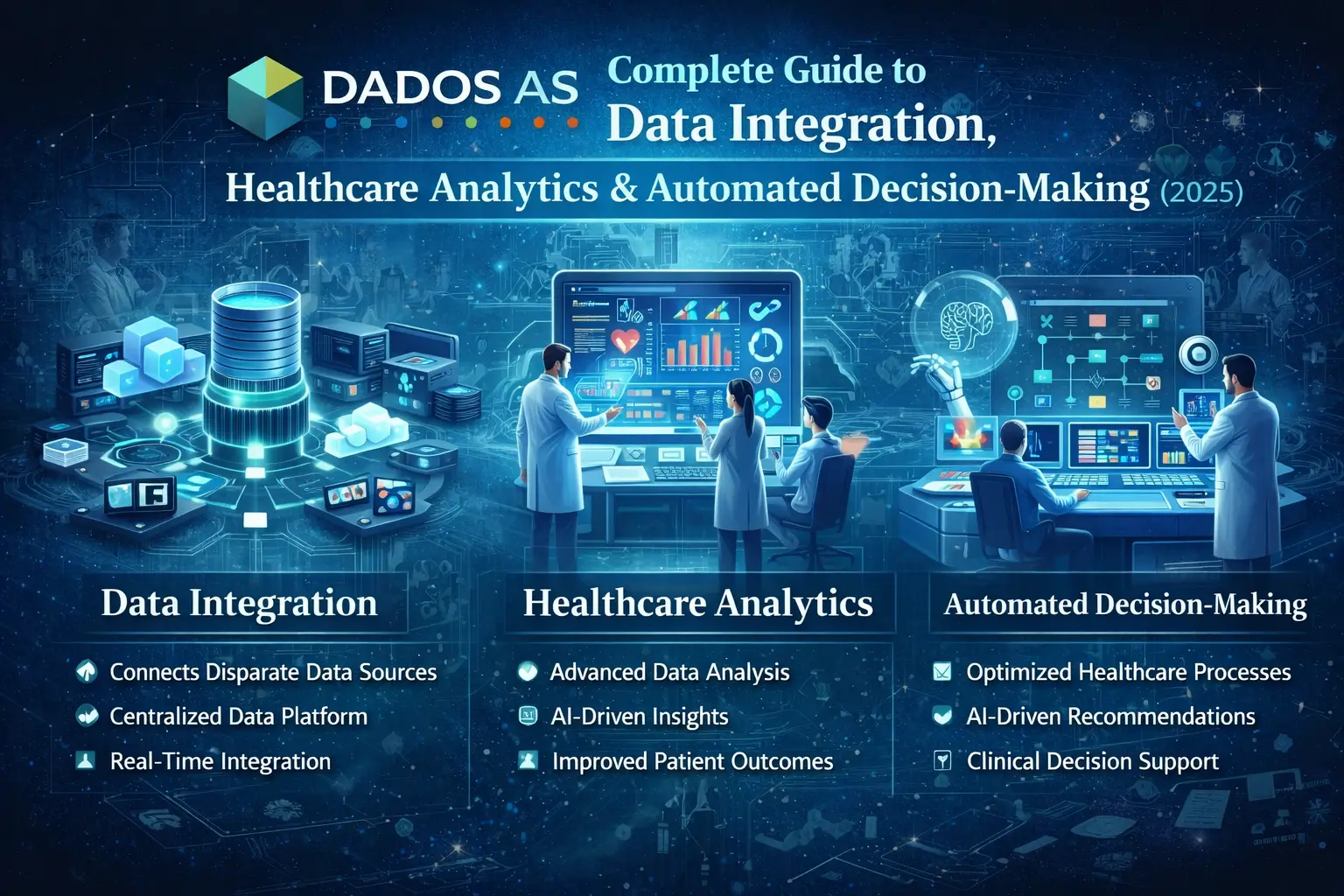
Introduction – Why DADOS AS Is Redefining Data-Driven Systems
Healthcare is rapidly shifting from siloed manual processes to automated, intelligent data ecosystems. Traditional approaches to data collection and analysis often leave clinicians and researchers buried in paperwork, struggling with disjointed systems that lack interoperability and real-time visibility.
DADOS AS is changing the game by providing a web-based automated platform that not only collects and organizes data but transforms it into actionable insights, empowering healthcare providers to make decisions faster and more accurately. By reducing administrative burdens and improving data quality, it supports both clinical decision making and research efficiency.
What Is DADOS AS?
DADOS AS (short for Data Driven Outcome System) is a cloud-enabled digital data automation platform primarily used in healthcare and clinical research environments. It facilitates automated data collection, integration, real-time reporting, and predictive analytics—all within a secure, scalable framework.
Originally developed to improve data workflows in clinical and research settings, DADOS AS integrates directly with electronic medical records (EMRs), supports multiple modes of data entry, and uses modern web standards for accessibility across devices.
The Core Concept Behind DADOS AS
Data as an Interconnected Ecosystem
The traditional way of handling data in healthcare involves manual entry, fragmented spreadsheets, and disconnected systems. DADOS AS reframes this approach by treating data as a connected, dynamic ecosystem rather than isolated instances. This means all participant and patient information is centrally collected, validated in real-time, and made available for analysis and reporting instantly.
This shift enables stakeholders to track data across devices, settings, and time—allowing for continuity in both clinical care and research.
Breaking Data Silos With Unified Architecture
One of the biggest barriers in healthcare analytics is data silos. These occur when systems cannot communicate with each other, often leading to incomplete views of patient records or study data. DADOS AS eliminates these barriers by enabling seamless data integration with EMRs and other clinical systems, standardizing information across platforms.
Real-Time Data Accessibility & Intelligence
Unlike traditional systems that require manual data aggregation and cleaning, DADOS AS provides live dashboards and real-time reporting, allowing care teams and researchers to see up-to-the-minute insights without delays. This real-time intelligence is invaluable for both clinical interventions and research quality assurance.
Evolution of DADOS AS in Modern Data Analytics
From Manual to Automated Data Collection
In the past, clinical and research data were collected through paper forms or basic digital tools, often involving duplicate entries and leading to high error rates. DADOS AS automates this process and drastically reduces human intervention.
Industry analysis suggests that automation platforms like DADOS AS can cut data entry errors by up to 60–80% and reduce administrative workload by as much as 40%, improving operational efficiency significantly.
Role of AI & Machine Learning
Modern data platforms aren’t just about storing data—they’re about extracting meaningful insights. DADOS AS incorporates AI-friendly architecture that supports predictive modeling which forecasts outcomes, risks, and trends based on existing data patterns.
Predictive Analytics as a Competitive Advantage
Healthcare institutions leveraging advanced analytics have reported 42% reductions in diagnostic errors and a 28% improvement in patient satisfaction through improved data integration and predictive modeling. While these figures are from broader predictive analytics studies, they illustrate the real potential impact when similar technologies like DADOS AS are implemented.
Key Features of DADOS AS
DADOS AS is loaded with features designed to support both clinical care and research workflows at scale.
Patient-Centric Data Collection
The platform offers intuitive, easy-to-use interfaces for patients to complete forms using tablets, kiosks, or personal devices. This flexibility enhances patient engagement and allows remote participation—especially useful for long-term studies or chronic care monitoring.
Data Standardization & Quality Control
DADOS AS includes templates and validation workflows that standardize datasets, ensuring higher accuracy and reliability. This minimizes errors and supports consistent data quality across large cohorts.
Integration & Interoperability
A major strength of DADOS AS is its ability to integrate with existing healthcare infrastructure, including EMRs and data repositories. It also supports open APIs, enabling connections to external tools and analytics platforms.
Real-Time Reporting & Dashboards
Administrators and clinicians can generate real-time reports, track trends, and identify concerns rapidly through customizable dashboards. This functionality boosts responsiveness and improves operational and clinical decisions.
Predictive Modeling & AI-Driven Insights
DADOS AS supports integration with predictive tools that leverage historical and real-time data to forecast future outcomes. Clinicians can use this to anticipate patient risks and refine care strategies earlier.
How DADOS AS Improves Decision-Making
With automated workflows, real-time reporting, and predictive capabilities, DADOS AS enables stakeholders to make faster, more informed decisions. Clinical teams spend less time searching for data and more time acting on insights. Researchers benefit from higher-quality datasets and streamlined analyses that accelerate research timelines.
By integrating multiple data sources into a single platform, it also supports evidence-based decision making, enabling providers to tailor treatments and interventions based on comprehensive patient profiles.
Real-World Applications of DADOS AS
DADOS AS can be used across a wide spectrum of scenarios where data quality, speed, and integration matter.
Healthcare & Clinical Practice
Hospitals and clinics use DADOS AS for efficient patient intake, outcome tracking, remote monitoring, and population health analysis—all designed to improve care delivery and patient satisfaction.
Clinical Research Studies
The platform’s structured data workflows and multi-site support make it ideal for clinical trials and longitudinal studies. Real-time data capture reduces delays and enables robust analytics.
Population Health Management
By aggregating data across large populations, healthcare systems can spot trends, identify at-risk groups, and devise interventions faster than ever before.
DADOS AS Use Cases in Healthcare
Clinical Data Collection
Traditional clinical data capture is often fragmented. DADOS AS centralizes this with standardized tools, promoting consistency and reducing redundancy.
Research Studies & Trials
Multi-center trial coordination is simplified with DADOS AS, which allows data to flow from different sites into a unified data set, making analysis and reporting more efficient.
Enhancing Quality of Patient Care
DADOS AS supports outcome tracking that helps clinicians adjust care plans in real-time based on patient-reported outcomes and data trends.
Reducing Hospital Readmissions
With predictive analytics supported by platforms like DADOS AS, care teams can identify patterns associated with readmissions and intervene earlier, reducing costly hospital returns.
Traditional Data Systems vs DADOS AS
| Feature | Traditional Methods | DADOS AS |
|---|---|---|
| Data Entry | Manual, paper or isolated systems | Automated, real-time digital entry |
| Error Rate | High | Reduced through validation |
| Integration | Limited or manual | EMR/API integration supported |
| Reporting | Slow, manual | Real-time dashboards |
| Patient Engagement | Low | High (remote + in-clinic) |
This comparison highlights the dramatic shift toward efficiency and reliability when leveraging modern data platforms like DADOS AS.
Benefits of Implementing DADOS AS
Improved Patient Outcomes
By enabling continuous data monitoring and personalized care pathways, healthcare systems see measurable improvements in clinical outcomes.
Enhanced Data Accuracy
Automated validation and standardized templates elevate quality, reducing errors that could lead to misdiagnoses or faulty research conclusions.
Streamlined Workflows
Administrative tasks are simplified, freeing personnel to focus on care delivery and research activities.
Cost Savings & Higher ROI
Fewer manual processes, reduced errors, and improved efficiency translate to lower operational costs and increased return on investment.
Regulatory Compliance
DADOS AS is designed to meet healthcare privacy standards such as HIPAA (USA) and PIPEDA (Canada), ensuring secure data handling and ethical practices.
Security, Privacy & Compliance in DADOS AS
Security is paramount in healthcare data systems. DADOS AS uses enterprise-grade encryption (AES) for data at rest and secure transmission protocols for data in motion. The platform also supports role-based access, audit trails, and multi-factor authentication—all critical for safeguarding sensitive patient information.
These measures help institutions maintain compliance with major privacy regulations, protect against unauthorized access, and build trust among patients and stakeholders.
How DADOS AS Bridges Research and Clinical Care
One of the most powerful advantages of DADOS AS is its ability to unify research and clinical data. Instead of having separate systems for studies and patient records, DADOS AS enables shared workflows, consistent data standards, and interoperable systems that strengthen evidence-based practice.
Researchers can leverage data collected during routine clinical care, while clinicians benefit from insights derived from broader research datasets—creating a continuous loop of learning and improvement.
Challenges & Limitations of DADOS AS
Even the most advanced systems face challenges:
Data Privacy Concerns
Strict compliance with data regulations remains a top priority and requires ongoing governance.
Integration Complexity
Connecting legacy systems—especially older EMRs—can be technically complex and require expert support.
Training & Adoption Barriers
Transitioning staff from traditional methods to automated platforms can require thorough training and change management strategies.
Despite these challenges, the benefits often outweigh the upfront costs and effort, especially in large organizations aiming for long-term growth.
The Future of DADOS AS
The future of healthcare data platforms like DADOS AS is closely tied to advancements in artificial intelligence, machine learning, and real-time analytics. Predictive models can help pre-empt health crises, optimize care pathways, and contribute to personalized medicine at scale.
With the global healthcare data integration market projected to continue growing—estimated to grow from $2.03 billion in 2023 to $2.40 billion in 2024 at a 17.7% CAGR—platforms like DADOS AS are well positioned to lead this transformation.
Frequently Asked Questions (FAQs)
Q: What is DADOS AS used for?
A: It’s used to automate data collection, integration, reporting, and predictive modeling in healthcare and clinical research.
Q: Is DADOS AS secure for patient data?
A: Yes—DADOS AS uses advanced encryption standards and complies with HIPAA, PIPEDA, and other regional privacy regulations.
Q: Can DADOS AS integrate with existing EMR systems?
A: Yes, it supports EMR integration and open APIs, enabling seamless data flow.
Q: Is DADOS AS suitable for small clinics?
A: Yes, the platform is scalable and adaptable for clinics, research institutions, and large health systems.
Q: Can DADOS AS handle multi-center studies?
A: Yes, it supports centralized data management across multiple research sites.
Conclusion – Why DADOS AS Is the Future of Data-Driven Healthcare
DADOS AS represents a pivotal shift in how healthcare and research organizations manage their most valuable asset: data. By automating workflows, improving data quality, and enabling real-time insights, it empowers teams to focus on what matters most—enhancing patient outcomes, accelerating research, and delivering high-impact results.
Read More: Coloration Indigo