Early Life and Family Background
Birth, Parents, and Escobar Family Roots
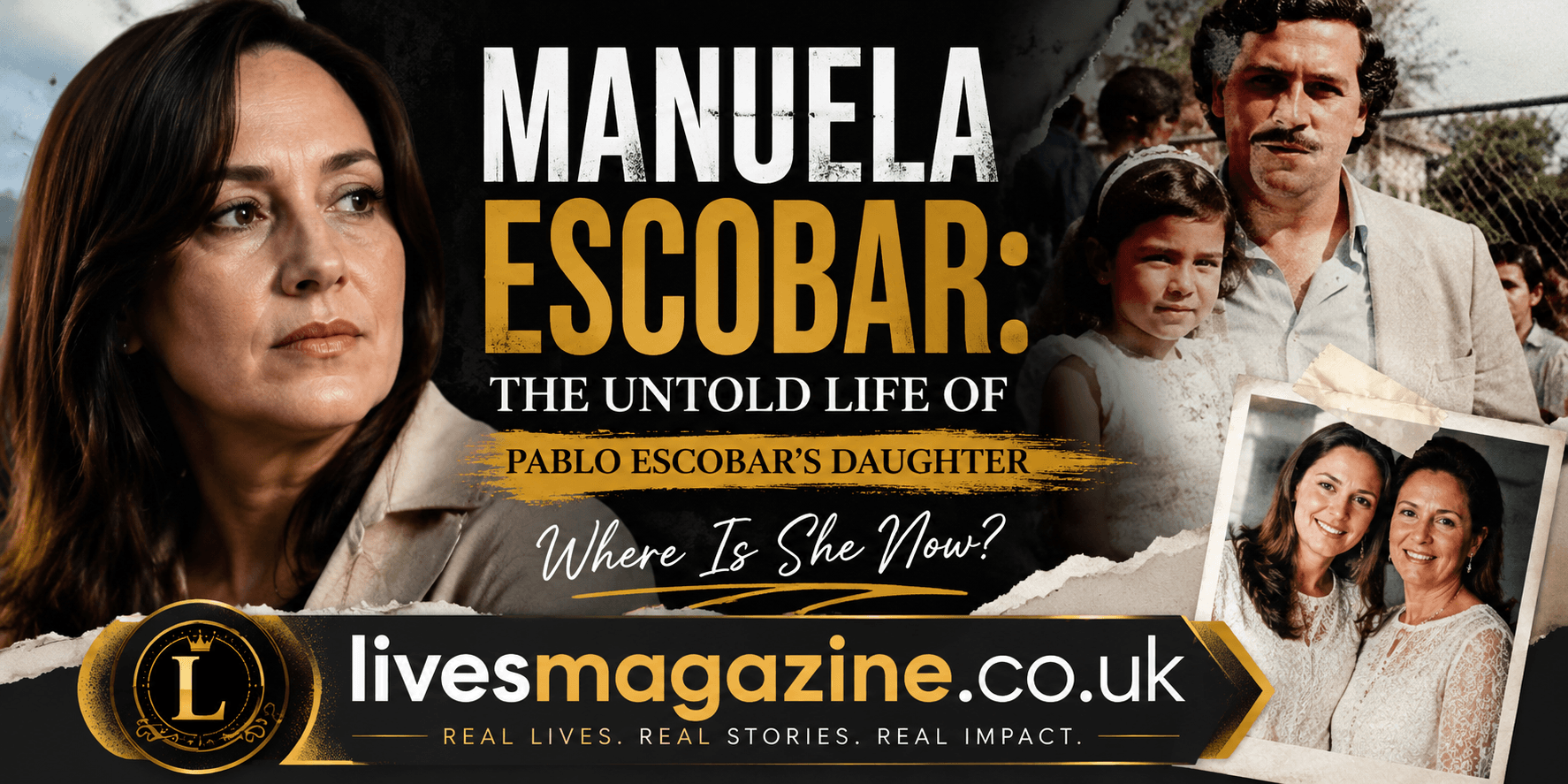
Manuela Escobar was born on May 25, 1984, in Colombia. She was the daughter of Pablo Escobar, the notorious drug lord who led the Medellín Cartel and amassed extraordinary wealth and power through cocaine trafficking in the 1980s and early 1990s. Her mother was María Victoria Henao, Pablo Escobar’s wife. Manuela also has an older brother, Juan Pablo Escobar, now known publicly as Sebastián Marroquín.
From birth, Manuela lived in a world few could imagine — surrounded by immense luxury made possible by her father’s criminal empire, but also shadowed by danger from his violent rivals and law enforcement.
Growing Up in a World of Wealth and Danger
Manuela’s early years were marked by extremes. On one hand, she experienced lavish comforts most children never see. Stories about her father’s devotion are legendary: Pablo would indulge even the wildest requests from his daughter, including creating a “unicorn” by attaching a horn and wings to a horse — a gesture that ultimately ended in the animal’s suffering.
Another dramatic tale that highlights their bizarre world occurred when the family was hiding. Escobar reportedly burned stacks of cash — estimated at around $2 million — simply to keep Manuela warm, as they lacked firewood.
Yet the opulence came with constant peril. The Escobar household was frequently under threat from Colombian authorities and violent cartel enemies. Living with armed guards, secrecy, and fear, Manuela’s childhood blended privilege with instability in ways few can comprehend.
Pablo Escobar’s Criminal Empire and Its Impact on His Family
Who Was Pablo Escobar? (Brief Context for New Readers)
Pablo Escobar is widely regarded as one of the richest and most powerful criminals in history. By the late 1980s, the Medellín Cartel was responsible for transporting vast amounts of cocaine into the United States and other countries. At the height of his power, Escobar’s wealth was estimated to be in the tens of billions of dollars, allowing him to influence politicians, communities, and even public sentiment in parts of Colombia.
Despite his criminal legacy, Escobar’s image in Colombia was complex: some communities saw him as a benefactor due to his philanthropic acts, while others knew him as a ruthless criminal responsible for enormous loss of life and widespread corruption.
How the Escobar Legacy Affected His Children
For children like Manuela, the consequences of her father’s actions were deeply personal. Beyond material wealth, she absorbed fear, instability, and emotional trauma. Her family’s situation was dangerous: rival cartels and law enforcement viewed Escobar’s inner circle — including his children — as potential targets.
This environment of instability had psychological effects on Manuela. Reports indicate she struggled with anxiety, depression, and frequent fear for her safety, long after her father’s death.
Tragic Turning Point — Pablo Escobar’s Death
What Happened in 1993
Pablo Escobar was killed on December 2, 1993 in a shootout with the Colombian National Police. At the time, Manuela was just nine years old. The assassination marked a violent end to Escobar’s reign but also triggered a new chapter of hardship for his family.
His death shattered the security — albeit fragile — that had protected the family. Without his influence and resources, the Escobars became vulnerable to the reprisals of rivals and the scrutiny of authorities.
Immediate Consequences for the Escobar Family
After Escobar’s death, his wife and children needed sanctuary. They attempted asylum in various countries but were repeatedly turned away due to international reluctance to harbor the family of a known criminal. Eventually, they managed to relocate to Africa and then South America, before finally settling in Buenos Aires, Argentina, under new identities.
The transition from a life of wealth to one of uncertainty was abrupt and traumatic for Manuela, who was forced to reconcile her identity with a world that now saw her family through a vastly different lens.
Life After Pablo Escobar
Leaving Colombia and Seeking Asylum
Following their father’s death, Manuela, her mother, and her brother fled Colombia in 1995. Their first stop was Mozambique, but African countries were not welcoming long-term. After brief stays in Mozambique and then Brazil, the family ultimately made their way to Argentina on a tourist visa.
Once in Argentina, they adopted new names and identities:
- Manuela became Juana Manuela Marroquín Santos
- Her brother became Juan Sebastián Marroquín Santos
- Her mother assumed a new identity as well
This change wasn’t just cosmetic — it was essential for their safety and anonymity in a world that still tracked the Escobar name.
Settling in Argentina and Rebuilding Life
Life in Argentina was fundamentally different from their previous existence. Without the safety of their father’s protection and wealth, they had to rebuild from scratch. The family lived a relatively ordinary life — Manuela and her brother attended local schools, and her mother worked to support them.
However, this transition wasn’t seamless. In 1999, Argentine authorities uncovered their true identities, leading to legal trouble. Manuela’s mother and brother were arrested on charges related to forgery and money laundering, though the family was eventually cleared due to lack of evidence.
The revelation of their true identities was particularly hard on Manuela, who responded by withdrawing further from public life.
Manuela Escobar’s New Identity and Name Change
Why Manuela Escobar Changed Her Name
Changing one’s name was a strategic decision following Escobar’s death. The objective was clear: avoid association with the Escobar legacy, which was globally infamous and could attract danger or misunderstanding.
For Manuela, becoming Juana Manuela Marroquín Santos was more than a safety measure — it was an opportunity to forge an identity separate from her father’s history.
Attempting a Normal Life Away from Her Father’s Name
Life under a new identity brought its own challenges. Manuela lived in normal neighborhoods, attended school like other children, and tried to move past her early experiences. Yet the weight of her surname — even hidden — still followed her. Media, public curiosity, and emotional scars from her childhood made it difficult to fully embrace a typical life.
Mental Health, Trauma, and Personal Struggles
Psychological Impact of Growing Up in a Narco World
Manuela’s early experiences were far from ordinary. Exposure to fear, danger, and upheaval at a young age had lasting effects on her emotional well-being. According to reports, she suffered from depression and anxiety, struggles that continued into adulthood.
Struggles with School and Social Life
The revelation of her family’s true identity in Argentina had deep social implications. Manuela reportedly faced bullying and discomfort in school, leading her to eventually refuse to attend classes publicly and instead receive education at home.
Reported Suicide Attempt and Ongoing Support
Some credible sources indicate that Manuela once attempted to take her own life, a tragic reflection of the emotional weight she carried from her past. Today, she reportedly lives with her brother and his wife, a supportive environment that helps her manage her mental health and maintain safety.
Where Is Manuela Escobar Now?
Life in Argentina Under a New Identity
As of 2025, Manuela Escobar — now viewing the world through the lens of Juana Manuela Marroquín Santos — continues to live a highly private and reclusive life in Argentina. There are no verified public appearances, social media accounts, or interviews attributed to her. Her choice to avoid the public eye reflects both a desire for normalcy and a need to stay safe given her family history.
Reports strongly suggest that she lives quietly in Buenos Aires, possibly with her brother and his family.
Why She Avoids Media and Public Appearances
Unlike her brother Sebastián, who became an author and public speaker, Manuela has deliberately chosen silence and privacy. This decision appears rooted in:
- A wish to avoid connection to her father’s crimes
- Personal trauma and psychological recovery
- Fear of public scrutiny or danger
Her absence from documentaries, books, and news reports is consistent with someone determined to detach from her past.
Personal Interests and Lifestyle
While Manuela’s life is intentionally private, some reports suggest she has interests in personal pursuits that help her express herself or find peace. These include artistic expression, compassion for animals, and travel, although none of these details are verified publicly and should be treated with caution.
Relationship with Her Mother and Brother
Bond with María Victoria Henao
Manuela’s mother, María Victoria Henao (now known by a different name), played a central role in protecting and guiding her children after Pablo’s death. She worked to keep the family safe, supported their education, and tried to build a new life in Argentina.
Relationship with Sebastián Marroquín
Unlike Manuela, Sebastián has engaged with the public, writing books and participating in documentaries about their father’s life. Manuela, however, has chosen silence — a stark contrast that highlights two very different approaches to dealing with a complex legacy.
Reports indicate that Manuela lives with Sebastián and his wife, suggesting a close bond and shared support network for navigating life after trauma.
Public Curiosity, Rumors, and Misconceptions
Is Manuela Escobar Deaf? (Fact vs Rumor)
There is no reliable evidence that Manuela is deaf. This appears to be misinformation circulating online, possibly stemming from unverified narratives. The more credible accounts focus on her reclusiveness and privacy, not physical disability.
Why Myths Persist About Her Life
Because Manuela has stayed out of the public eye, speculation about her life has thrived. Rumors about her activities, relationships, and experiences reflect the gap between public curiosity and confirmed facts.
Her absence from media — combined with her father’s notorious status — has created fertile ground for theories, but it’s important to separate verified information from conjecture.
Manuela Escobar vs Her Father’s Legacy
Refusing to Glorify Pablo Escobar
While Pablo Escobar remains a figure of notorious fame, many critics argue that romanticizing his life overlooks the immense violence and destruction caused by his criminal empire. Manuela’s decision to stay out of the spotlight can be seen as a deliberate rejection of that legacy.
Her silence serves as a powerful contrast: instead of capitalizing on her father’s fame, she chose anonymity and personal peace — a rare path for someone linked to such a famous name.
Living Beyond the Shadow of Crime
Manuela’s life story is a testament to resilience. Though her identity is forever connected to the consequences of her father’s actions, she has worked to define herself on her own terms: quietly, privately, and independently.
Her journey — from a childhood in extreme wealth and danger to a life of seclusion and healing — reflects the complexity of human experience when shaped by extraordinary circumstances.
Lessons From Manuela Escobar’s Life Story
How Family Legacy Shapes Identity
Manuela’s story illustrates that family history can profoundly impact identity — but it doesn’t have to dictate one’s entire life. While her father’s legacy is undeniable, she has actively sought to create her own sense of self and safety.
Can Children Escape a Dark Past?
Her life raises significant questions about destiny, choice, and healing. Children born into difficult or notorious circumstances often carry burdens not of their own making, but Manuela’s story shows that transformation and personal choice remain powerful forces.
Frequently Asked Questions About Manuela Escobar
What happened to Pablo Escobar’s daughter?
Manuela Escobar fled Colombia after her father’s death in 1993 and eventually settled in Argentina with her family under new identities. She lives a private, reclusive life.
Where does Manuela Escobar live now?
She is believed to reside in Buenos Aires, Argentina, living quietly under the name Juana Manuela Marroquín Santos.
Is Manuela Escobar alive?
Yes. Manuela Escobar is alive and continues to live away from the public eye.
Why did Manuela Escobar change her name?
She changed her name to protect her identity and distance herself from her father’s criminal legacy.
What does Manuela Escobar do today?
There are no public records of her professional life. She reportedly lives privately, with no known public career presence.
Final Thoughts
Manuela Escobar’s life is more than a footnote in the story of Pablo Escobar. It’s a powerful human narrative about survival, reinvention, and the difficult journey from trauma to quiet healing. While her father’s name will likely remain infamous, Manuela’s commitment to peace and anonymity speaks volumes about her character and strength.
Read More : Joel Osteen House