Introduction – The Bench That Sparked a National Conversation
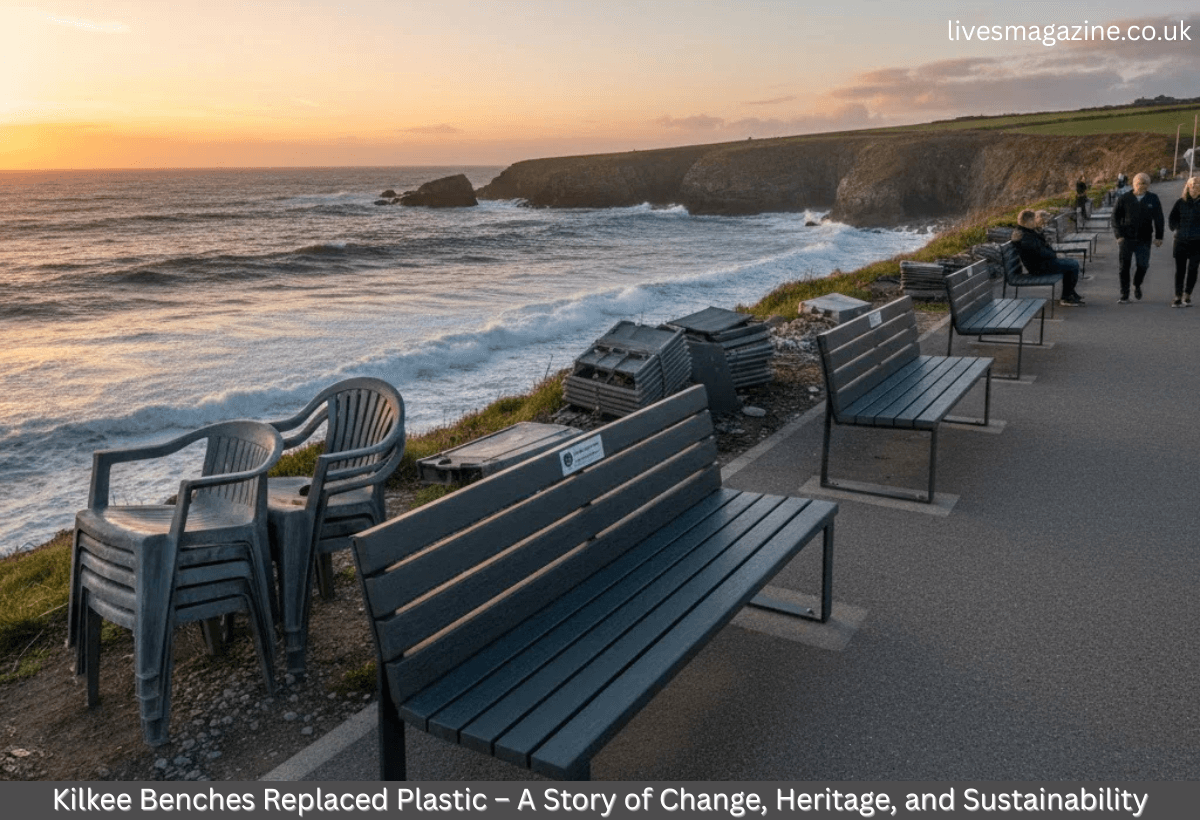
What started as a routine public-works decision in a small Irish seaside town turned into a lively debate about identity, sustainability, and who gets a say in public space design. In mid-2025 Kilkee—famous for its cliffs, bandstand and promenade along the Wild Atlantic Way—saw several of its long-loved blue-and-white wooden benches removed and replaced with brown recycled-plastic seating. For many residents those benches were more than places to rest; they were symbols of community memory and sporting pride. The replacements, even if chosen for safety and environmental reasons, provoked strong reactions, widespread chatter on social media and coverage in regional press.
This article examines the full story: the history of Kilkee’s benches, why the change happened, the environmental and economic logic involved, how the community reacted, and the lessons other towns can draw from Kilkee’s experience. I’ll also map practical alternative approaches that could have preserved heritage while meeting sustainability and safety goals.
The History of Kilkee’s Iconic Blue and White Benches
Kilkee’s blue-and-white benches were instantly recognizable along the seafront. Painted in the local Gaelic Athletic Association (GAA) colors, they linked everyday life—walks, sunsets, and conversations—with local sport, memory and civic identity. For decades these benches punctuated scenic viewpoints: the Esplanade, the bandstand, George’s Head car park and other promenades where locals and tourists paused to take in the Atlantic swell.
Public furniture often reads like a town’s shorthand: a color, a style or a cluster of seats tells a visitor something about place and people. In Kilkee the simple color scheme was a visual cue that signalled community cohesion and a continuity of local tradition. That is why their removal immediately carried emotional weight beyond mere utility.
Why the Kilkee Benches Were Replaced
Local authorities have offered practical reasons: structural deterioration and safety concerns. Many of the wooden seats had been in place for years and, exposed to salt spray, rain and sun, were showing signs of rot and instability—conditions that can present real hazards in public spaces. Clare County Council and related local bodies face a duty of care to remove or replace seating that may be unsafe.
Beyond safety, councils and local partners increasingly evaluate long-term maintenance and environmental footprints when choosing street furniture. Recycled plastic benches promise low upkeep and high durability in coastal climates where moisture, salt and wind accelerate wear on timber. Kilkee’s push toward more sustainable local practices also fits a longer municipal strategy—Kilkee has been recognized previously in waste-management and green-business initiatives—so choosing recycled materials aligned with existing environmental priorities.
What Makes Recycled Plastic Benches Different?
Recycled plastic benches are typically manufactured from HDPE (high-density polyethylene) or composite materials derived from post-consumer and industrial plastics. Key attributes:
- Durability: Plastic benches resist rot, insect damage, and many of the degradation issues that timber faces in coastal environments.
- Low maintenance: No sanding, repainting or regular sealing is required—washing is usually adequate.
- Recyclability and circularity claims: When made from post-consumer plastic, they reduce virgin plastic demand and can sometimes be recycled again at end of life (depends on local waste streams).
- Cost profile: They often cost less over the lifespan when factoring painting and repair needs for timber.
However, recycled plastic benches are not identical in look or feel to timber. Color, texture and the cultural resonance of wood are different; the visual impact is a frequent sticking point in heritage settings.
Community Reaction – Divided Between Nostalgia and Progress
The response in Kilkee has been sharply divided. On the one hand, many residents appreciated that unsafe seating was replaced quickly and welcomed low-maintenance options that reduce long-term public expenditure. On the other, a vocal group criticized both the aesthetic choice (brown, plain benches that many called “awful”) and the perceived lack of consultation. Local coverage and community posts suggested that roughly 20 of the original benches had been taken out and replaced in the early weeks of the rollout—action that amplified emotions because it visibly changed familiar vistas almost overnight.
Social media threads and local letters described sadness and frustration: people reported that the benches had been a “trademark” of Kilkee’s seafront and argued that the council should have consulted the town before installing plain brown plastic seating in lieu of the blue-and-white heritage style.
The Heritage Debate – When Sustainability Meets Identity
Kilkee’s situation highlights a classic tension municipalities face worldwide: how to reconcile the demands of durability, cost and sustainability with cultural identity and place-making.
Three core arguments emerge from the debate:
- Practicality proponents emphasize lifespan, safety, maintenance budgets, and environmental credentials of recycled materials.
- Heritage proponents stress that public furniture contributes to a town’s sense of place and historic continuity; replacing distinctive items with generic alternatives can erode identity.
- Process critics ask: did the council communicate sufficiently, and were residents given meaningful input before the change?
When identity is at stake, design choices matter as much as technical specifications. A bench painted in community colors signals belonging; a generic brown seat—even if environmentally friendly—can feel like an erasure.
Environmental and Economic Considerations
Environmental trade-offs. Recycled plastic benches can reduce demand for new timber and claim carbon savings if they use diverted waste. However, plastic production—even recycled—has upstream emissions; and if not managed well, plastic items can contribute to microplastic pollution as they weather. Longevity and end-of-life recyclability are crucial to whether such benches truly reduce environmental harm.
Economic analysis (10–20 year lens). Timber benches require repainting, repairs and eventual replacement—costs that recur. Recycled plastic benches incur higher embedded energy early, but lower annual maintenance costs. For towns with constrained maintenance budgets, the lower running costs are persuasive. In Kilkee’s coastal climate, the calculus shifts toward materials that withstand salt, wind and frequent wetting.
Tourism economics. There’s anecdotal evidence—supported in local coverage—that Kilkee’s green positioning (e.g., as a My Waste Green Business Hub partner) is attractive to eco-conscious visitors. Replacing benches with recycled material can be framed as part of that strategy; however, if the change alienates residents and damages town aesthetics, there’s a risk of diminishing the very visitor experience the strategy seeks to enhance. Balancing environmental credentials with place aesthetics is therefore both an ecological and economic exercise.
Kilkee’s Coastal Challenges and Climate Adaptation
Coastal towns like Kilkee face unique infrastructure stresses:
- Salt corrosion eats away metal fixings and accelerates wood decay.
- High winds and spray shorten life cycles for many materials.
- Rising storm frequency increases the need for robust, resilient street furniture.
For these reasons, local planners sometimes prioritize materials that mitigate long-term replacement cycles and emergency repair costs. Recycled plastics and engineered composites can offer an advantage in climates where timber would otherwise require frequent intervention.
Still, resilience need not be visually insensitive. With considered specification—color matching, textured finishes, or hybrid constructions—durable materials can be integrated without sacrificing the visual cues that define a place.
The Role of Public Consultation and Local Voices
A major source of anger in Kilkee was the perception that decisions were made without meaningful community consultation. Residents reported surprise at the speed and finality of the replacements—comments that suggest the project may have benefited from broader engagement.
Best practice for public infrastructure changes usually includes: published rationale, open meetings, visual mockups, messaging about environmental and safety benefits, and a window for input. Those steps don’t guarantee unanimous approval, but they tend to reduce feelings of exclusion.
Kilkee’s case is a reminder that procedural legitimacy matters: even technically justified choices can provoke backlash if people feel their heritage and voice were ignored.
Art, Identity, and the Aesthetics of Change
Street furniture is a form of public art. Benches, lampposts, bins and planters collectively shape how people read a place. The aesthetic dimension is not superficial; it shapes memory, navigation, imagery, and the emotional texture of public life.
Design options that respect identity while meeting modern needs:
- Recycled plastic slats in traditional blue and white mounted on corrosion-resistant metal frames.
- Reclaimed timber tops with recycled-plastic substructure for durability.
- Custom-colored composites produced to match heritage palettes.
- Locally commissioned benches with plaques or engravings that tell the community story.
Design-led solutions like these demonstrate that sustainability and aesthetics can be complementary, not adversarial.
Alternatives That Could Have Been Considered
Several pragmatic alternatives might have balanced conservation with sustainability:
- Hybrid construction: Recycled-plastic framing with painted recycled or reclaimed timber slats replicating the blue-and-white aesthetic.
- Refurbishment program: Replace rotten planks selectively and apply modern protective coatings that extend timber life considerably.
- Local manufacture: Commission locally made benches using sustainably sourced timber treated for coastal use—this keeps economic benefit in town and supports place identity.
- Color-matched composites: Specify recyclable composite boards pigmented into the blue palette so no repainting is necessary but the original look remains.
- Phased consultation and pilot: Trial a small number of alternatives and solicit feedback before wider rollout.
These approaches reduce the sense of abruptness while aligning with the technical aims that motivated the replacements.
Broader Lessons for Other Irish Towns
Kilkee is not unique. Across Ireland and the UK councils have replaced timber benches with recycled plastic options to reduce maintenance costs and improve resilience. But Kilkee demonstrates:
- Process matters: Early consultation reduces backlash.
- Design matters: Visual continuity can be preserved with thoughtful material choices.
- Framing matters: Communicating safety, lifespan and environmental trade-offs helps residents see the bigger picture.
- Piloting matters: Small, reversible pilots let councils gauge public acceptance before committing to broad rollout.
Towns considering similar upgrades should prepare communications, design mockups, and a phased approach that treats heritage as a design constraint rather than an obstacle.
Key Facts and Figures About the Kilkee Benches Project
- Estimated number of benches replaced: ~20 original blue-and-white seats were reported removed and replaced in the initial weeks of the programme.
- Reported timing of coverage and public debate: Local coverage and online discussion intensified in mid-2025, with multiple regional outlets and community groups discussing the removals and replacements.
- Local green initiatives context: Kilkee has been recognized as one of Ireland’s My Waste Green Business Hubs (selection announced July 25, 2023), indicating an established interest in local waste reduction and sustainability programmes that frame the bench decision.
(Note: exact contract costs, manufacturer and per-bench price were not disclosed in public reporting available at time of coverage; councils frequently publish procurement details in separate tender documents or minutes.)
Frequently Asked Questions (FAQs)
Q1: Why did Kilkee replace the original blue-and-white benches?
A1: The council cited structural deterioration and safety concerns plus a desire to choose durable, low-maintenance and more sustainable seating materials suitable for a coastal climate. Local debate indicates the decision was also part of longer-term environmental priorities.
Q2: Were residents consulted before the replacements?
A2: Many residents say they were not sufficiently consulted, and that perception of exclusion fuelled much of the backlash. Best practice would have included broader community engagement and visual trials.
Q3: Are recycled plastic benches actually better for the environment?
A3: It depends. If benches are made from post-consumer waste and retained in use long enough, they can reduce demand for virgin materials and lower maintenance-related impacts. But embedded emissions, eventual microplastic risk and local end-of-life recycling infrastructure all influence the true life-cycle outcome.
Q4: Could the original look have been preserved?
A4: Yes—through hybrid designs, color-matching composites or repainting durable composite slats in the blue-and-white pattern. These options keep visual identity while improving longevity.
Q5: Did the bench replacement affect tourism?
A5: Initial media coverage framed Kilkee as both confronting heritage concerns and leading sustainability efforts. Anecdotally, eco-minded visitors appreciate sustainability initiatives—but aesthetic backlash can complicate the message. The long-term tourism effect depends on how Kilkee balances conservation and green upgrades over time.
The Future of Kilkee’s Seafront Design
Kilkee’s bench debate may prove to be a pivot point that encourages more thoughtful design choices across town projects. Opportunities include:
- Co-design initiatives where residents and designers collaborate on future public seating.
- Pilot programmes testing color-matched composites and hybrid frames.
- Interpretive signage that explains sustainability choices and links them to local environmental goals.
- Local manufacturing partnerships that keep funds in the local economy while producing culturally appropriate seating.
By coupling technical needs with design empathy, Kilkee can model a constructive path where sustainability reinforces, rather than erodes, local identity.
Conclusion – Preserving the Soul of Kilkee Through Sustainable Design
Kilkee’s benches story is about more than timber versus plastic. It’s about how communities negotiate the intersection of memory, aesthetics and modern imperatives—safety, budget constraints and environmental stewardship. The case illustrates that technical rationale alone won’t settle matters of place; process, communication and design sensitivity are equally vital.
If councils want to upgrade town infrastructure with greener, more durable materials, they’ll get the best social outcome by treating heritage as a design requirement rather than an obstacle. That means early community involvement, transparent cost and environmental comparisons, and design choices that honor visual identity. For Kilkee, the debate is not over: there’s still an opportunity to reconcile sustainability with style—bringing back the colors in a durable, low-maintenance way that both prevents waste and keeps the town’s soul visible on its seaside promenade.
Read Also:- Repmold