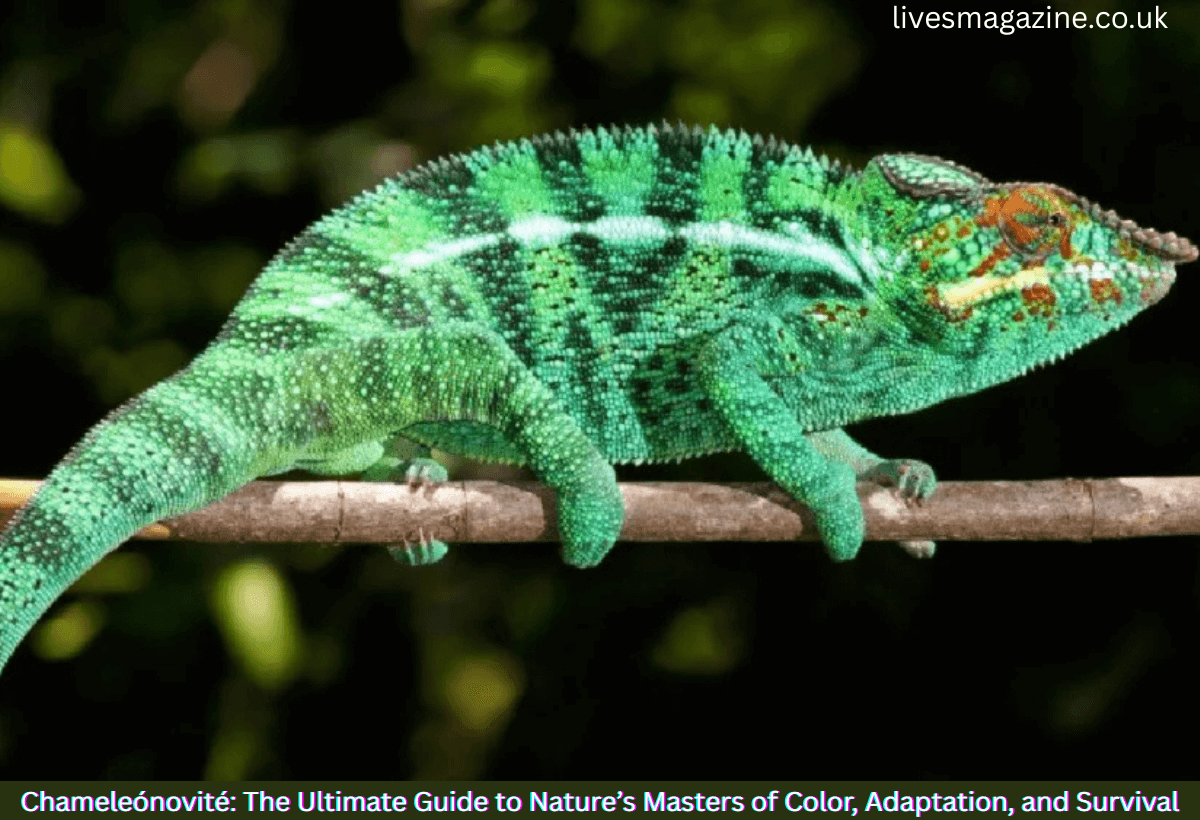
Introduction — Why Chameleónovité Fascinate Scientists and Nature Lovers
A single glance at a chameleon shows why so many people are captivated: intricate color patterns, an almost mechanical independence of each eye, and a tongue strike that is arguably one of the most spectacular natural ballistic motions. But the appeal goes beyond spectacle. Chameleons are living demonstrations of how structural biology (nanocrystals in skin), sensory engineering (independently mobile eyes), and behavioral signaling evolve together to solve real-world problems: capturing prey efficiently, thermoregulating in variable climates, and communicating in dense vegetation.
Their diversity is also striking. Most species are concentrated in Madagascar, an island that harbors an extraordinary number of unique reptiles, while others are found across sub-Saharan Africa, parts of southern Europe, and pockets of Asia. This geographic clustering makes them both biological treasures and ecological warning signs: when Madagascar’s forests suffer, chameleons are often among the first groups to feel the stress.
What Is Chameleónovité?
The scientific classification of Chameleonidae
Chameleons belong to the family Chamaeleonidae. They are Old World lizards — meaning they evolved and diversified primarily in Africa, Madagascar, and Eurasia. Within Chamaeleonidae there are many genera and a remarkable variety of body plans, from robust tree-dwelling species to tiny, ground-dwelling dwarf chameleons.
Evolutionary background and species diversity
Modern taxonomy and field surveys have revealed far more species than earlier centuries suspected. As of the most recent specialist compilations, researchers recognize over 220 species of chameleons worldwide — a number that continues to change as new surveys and genetic analyses refine our understanding. This species richness is especially high in Madagascar, where microhabitat specialization has driven intense local diversification.
Where they live and how they’ve adapted
Chameleons are primarily arboreal (tree-living) but include ground-dwelling species as well. Anatomical features adapted for climbing — like zygodactylous feet (two toes pointing forward and two back), prehensile tails, and laterally compressed bodies — let them navigate branches with remarkable stability. Many species are habitat specialists, occurring only on small mountain ridges or narrow forest fragments, which makes them especially vulnerable to localized habitat loss.
The Science Behind Color Change in Chameleons
For decades people assumed chameleons changed color by simply moving pigments around inside skin cells. The actual mechanism is more elegant and surprising: chameleons use a combination of pigment cells and structural coloration driven by precisely arranged nanocrystals.
Chromatophores and iridophores explained
Chameleon skin contains different layers of specialized cells. Chromatophores contain conventional pigments (dark melanin, yellow and red carotenoids), while iridophores (a type of reflective cell) contain lattices of guanine nanocrystals. Those crystals act like microscopic mirrors: by changing their spacing and arrangement, the iridophores alter the wavelengths of light that are reflected, producing different colors.
The role of guanine nanocrystals and light reflection
Laboratory imaging and photonic modelling showed that chameleons can actively tune the spacing of guanine nanocrystals to shift the reflected color across the blue–red spectrum. A relaxed nanocrystal lattice reflects shorter wavelengths (blues); when the lattice expands, longer wavelengths (yellows and reds) are reflected. This mechanism allows rapid, reversible color changes that are both vivid and finely graded. The discovery of this photonic-crystal-based control marked a major advance in understanding animal color-change.
How color change happens in seconds — the biological process explained
Color changes can take place in seconds because they rely partly on quick physical rearrangements in iridophores assisted by physiological signals (nervous and hormonal). On top of the iridophore effect, chromatophores modulate pigments for subtler or longer-term shifts. Together, these layers enable chameleons to produce dazzling courtship displays, stress signals, or thermoregulatory color changes.
Why Do Chameleons Change Color? (It’s Not Just for Camouflage)
Color change in chameleons is multifunctional — it’s a language, a thermostat, and sometimes a disguise.
Communication and emotional signaling
Many species display bright colors during courtship or territorial disputes; males in particular often flash high-contrast patterns to attract mates or intimidate rivals. Subdued, darker tones may signal submission or stress. Because chameleons live in three-dimensional, visually complex habitats, color signaling is an efficient way to communicate across short distances without moving closer and revealing vulnerability.
Temperature control and thermoregulation
Color affects heat absorption: darker surfaces absorb more solar radiation. Chameleons exploit this by switching to darker hues to warm up in cool conditions and lighter hues to avoid overheating. Some iridophores even reflect near-infrared light, helping to regulate thermal balance while minimizing visible change.
Camouflage and survival in the wild
Although camouflage is a classic explanation, it’s often secondary to social signaling. Nevertheless, certain species and contexts do use background matching for predator avoidance or stalking prey — especially species that remain motionless and rely on immobility plus color matching to escape detection.
Scientific experiments that revealed these behaviors
Behavioral studies combining field observation and controlled laboratory trials have teased apart social vs. environmental drivers of color change. For example, male–male encounters reliably trigger aggressive color patterns, while changes in ambient temperature elicit more generalized thermoregulatory shifts.
The Extraordinary Eyes of Chameleons
If chameleons were cameras, they’d be panoramic security systems with fast autofocus.
How independent eye movement works
Each eye is mounted in a turret and can rotate independently — allowing nearly 360° surveillance around the animal. This gives chameleons a remarkable ability to scan the environment for both predators and prey without moving their bodies, which helps them remain concealed.
The secret of 360° vision and depth perception
Although the eyes often move independently, they can also converge and coordinate for precise binocular vision when focusing on prey. The swift switch from independent scanning to synchronized fixation enables accurate distance estimation immediately before the tongue strike — a critical advantage for a sit-and-wait predator.
Hunting precision and prey-catching techniques
When a chameleon locks both eyes on a target, its brain rapidly calculates distance and direction, then fires the tongue. Recent anatomical and behavioral studies highlight how chameleons coordinate ocular motion and strike mechanics to achieve successful captures.
Chameleónovité in the Ecosystem
Role in insect population control
Chameleons are insectivores (though some larger species eat small vertebrates) and help regulate insect populations in forests and savannas. Their selective predation can influence local insect community structure.
Importance in biodiversity and ecological balance
Because many chameleons occupy narrow ecological niches, they serve as indicator species—their abundance and diversity can reflect the health of forest microhabitats and the effects of land-use change.
How they influence other species in their habitat
Chameleons are both predator and prey: they control insect numbers and, in turn, provide food for birds, snakes, and small mammals. Their presence contributes to the overall complexity and resilience of ecosystems they inhabit.
Threats and Conservation Challenges Facing Chameleónovité
Chameleons face multiple, interacting threats — habitat loss, climate change, and the wildlife trade among the most pressing.
Habitat destruction and deforestation
Across Africa and Madagascar, conversion of forests to agriculture, logging, and fires fragment and eliminate the microhabitats many chameleons require. Species restricted to small mountain ranges or isolated forest pockets are especially vulnerable.
Climate change and environmental pressures
Modeling studies that combine climate and land-use scenarios indicate severe future losses for many Madagascar chameleons. One recent modeling analysis concluded that approximately 30% of Madagascar’s chameleons could lose nearly all of their suitable habitat under combined climate and land-use scenarios, with land conversion being the primary driver. This paints a stark picture for species with tiny ranges.
Illegal pet trade and overcollection
Chameleons are popular in the international pet trade, and unsustainable collection has been identified as a major pressure. Recent analyses of wildlife trade trends document continued demand for wild-caught individuals; this amplifies vulnerability for species already stressed by habitat loss. Trade regulations and captive-breeding programs help, but illegal and poorly regulated collection remains a problem.
Global conservation efforts and organizations protecting them
Conservation responses include protected-area designation, community-based habitat management, captive-breeding and reintroduction programs, and stricter trade monitoring under CITES and national laws. Scientific surveys that identify priority hotspots and newly discovered species are central to prioritizing protection on the ground.
Chameleónovité and Human Innovation
Chameleons are not just biological curiosities — their skin’s nanostructures and behavior inspire real-world technologies.
What science has learned from chameleon nanostructures
The discovery of active photonic crystals in chameleon skin has excited materials scientists. By mimicking guanine nanocrystal lattices that shift spacing to change reflected wavelengths, engineers are designing “smart skins” — materials that can alter color or thermal reflectance in response to stimuli.
Chameleon-inspired materials and robotics
Researchers are exploring adaptive camouflage for textiles and soft robotics that adjust coloration for energy efficiency or signaling. The idea of layering pigment cells with tunable reflective structures provides a blueprint for multifunctional materials that simultaneously manage light and heat.
How these discoveries are shaping smart technology and camouflage design
From military camouflage concepts to energy-saving building facades that adjust near-infrared reflectivity, the chameleon’s photonics offer practical applications. Translating biological control into scalable materials remains a challenge, but progress in nanofabrication is narrowing the gap.
Chameleons as Pets — Beauty, Responsibility, and Ethics
Chameleons are mesmerizing pets — but not for casual owners.
Which species are suitable for captivity
A few species (like the veiled chameleon and some panther chameleons) tolerate captivity better and are commonly bred in captivity. However, many species are delicate, have specialized environmental needs, and should not be taken from the wild.
Essential care requirements (UVB, humidity, diet)
Proper husbandry includes correct UVB lighting, temperature gradients, humidity cycles, appropriate vertical enclosure space with live plants, and a diet of appropriately gut-loaded insects dusted with calcium and vitamins. Inadequate husbandry leads to high mortality and welfare problems.
Ethical concerns and responsible ownership
Prospective owners should:
- Prefer captive-bred animals with transparent provenance.
- Research species-specific needs thoroughly.
- Avoid handling frequently (many chameleons are stressed by handling).
- Work with reputable breeders and veterinarians.
Conservation-minded pet ownership also means supporting programs that reduce pressure on wild populations and funding habitat protection.
Chameleónovité in Culture, Symbolism, and Art
Chameleons have long symbolized adaptability and transformation.
Chameleons in folklore and symbolism
Across cultures, chameleons are metaphors for change, camouflage, and the ability to survive by blending in. In some regions they are associated with patience and observation.
Artistic representation across cultures
Artists have used chameleon imagery in textiles, paintings, and modern design to suggest versatility or hidden complexity. Contemporary designers sometimes reference chameleon nanostructures when creating color-shifting materials.
Popularity in modern media and design
From children’s books to tech showcases, chameleons are recurring motifs for topics ranging from climate change (adaptation vs. vulnerability) to responsive material design.
How to Support Chameleon Conservation
Donate or volunteer with conservation programs
Support organizations that focus on Madagascar and African forest conservation, scientific research, or local community conservation initiatives. Well-managed donations can fund habitat protection and species monitoring.
Spread awareness about ethical reptile keeping
Educate potential pet owners about the importance of captive breeding, proper husbandry, and the risks of buying wild-caught animals.
Avoid illegal wildlife trade and choose captive-bred animals
By refusing to buy wild-caught chameleons and reporting suspicious trade, consumers can reduce market demand that drives illegal collection.
Recent Scientific Discoveries About Chameleónovité
2024–2025 field research from Madagascar
Recent fieldwork and modelling efforts highlighted urgent conservation priorities: several species have highly restricted ranges threatened primarily by land conversion. The 2024 modeling study that found significant future habitat loss for many Madagascar chameleons underscores the need for rapid conservation action.
New species and genetic findings
Taxonomists continue to describe new chameleon species as surveys reach remote areas, and genetic tools clarify cryptic diversity (species that look similar morphologically but are genetically distinct). This has both conservation and scientific implications: protecting a patch of forest may save multiple unnamed species.
Future research directions and ecological predictions
Priority areas include mapping microhabitat requirements for narrow-range species, improving trade monitoring, and developing community-driven conservation that aligns local livelihoods with habitat protection.
Fascinating Facts About Chameleónovité
- Active photonic crystals: Chameleons tune guanine nanocrystals to change color, a discovery that reshaped our understanding of animal color change.
- Species richness: There are over 220 chameleon species described and recognized by specialists, with new species still being discovered.
- Madagascar vulnerability: Modeling suggests ~30% of Madagascar’s chameleons could lose nearly all suitable habitat under projected land-use and climate scenarios — a serious conservation alarm.
- Tongue strike speed: Chameleon tongue projection is extremely fast — studies report maximum speeds in the order of meters per second for strikes across distances of tens of centimeters. This rapid ballistic motion is powered by elastic recoil mechanisms in the tongue.
- Trade pressure: International wildlife trade remains a significant pressure on many chameleon populations; recent analyses document ongoing trade and the need for stricter regulation and captive breeding to reduce wild collection.
FAQs ( About Chameleónovité)
1. What does “Chameleónovité” mean?
It refers to the family Chamaeleonidae — the biological group composed of chameleons. The term is used in some languages to name this family of color-changing lizards.
2. How many species of chameleons exist today?
Specialist groups list over 220 species of chameleons worldwide, a total that increases as taxonomists describe new species and use genetic tools to identify distinct lineages.
3. Can chameleons change to any color?
No — their palette depends on species-specific pigment and structural color combinations. Iridophores and chromatophores give each species a certain range of achievable hues, which are used primarily for signaling and thermoregulation.
4. Why are chameleons mostly found in Madagascar?
Madagascar’s long geological isolation fostered intense speciation. Many chameleon lineages diversified there into specialized forms adapted to microhabitats across the island.
5. How long do chameleons live in the wild and captivity?
Lifespan varies widely. Some small species may live 2–4 years, while larger species like certain Jackson’s and veiled chameleons can live 5–10 years under good captive care. Lifespans in the wild often depend on predation and habitat quality.
6. Are chameleons good pets for beginners?
Generally, no. Chameleons need species-appropriate enclosures, correct UVB lighting, proper humidity and temperature gradients, and a carefully managed diet. Beginners should research extensively and consider easier reptile species before attempting chameleon care.
7. What’s the biggest threat to Chameleónovité species?
Habitat loss from land conversion is the primary threat, especially in Madagascar. Climate change and the wildlife trade compound this pressure, particularly for species with tiny ranges.
8. How can I help protect endangered chameleon species?
Support reputable conservation organizations, choose captive-bred animals if you keep chameleons, spread awareness about ethical pet ownership, and advocate for habitat protection and responsible land-use policies.
Final Thoughts — What We Can Learn from Chameleónovité
Chameleons are more than color-changing curiosities. They are case studies in how evolution solves multiple problems simultaneously — communication, thermoregulation, and predation — with elegant biological engineering that now inspires human technologies. But admiration must be coupled with action: many chameleon species live on ecological razor-edges, and human-driven habitat change and trade can tip those scales.
If you love chameleons, the most impactful actions are simple and effective: support habitat protection, choose captive-bred animals over wild-caught, educate others about proper husbandry and conservation, and encourage policies that protect the tiny, specialized habitats on which so many species depend.