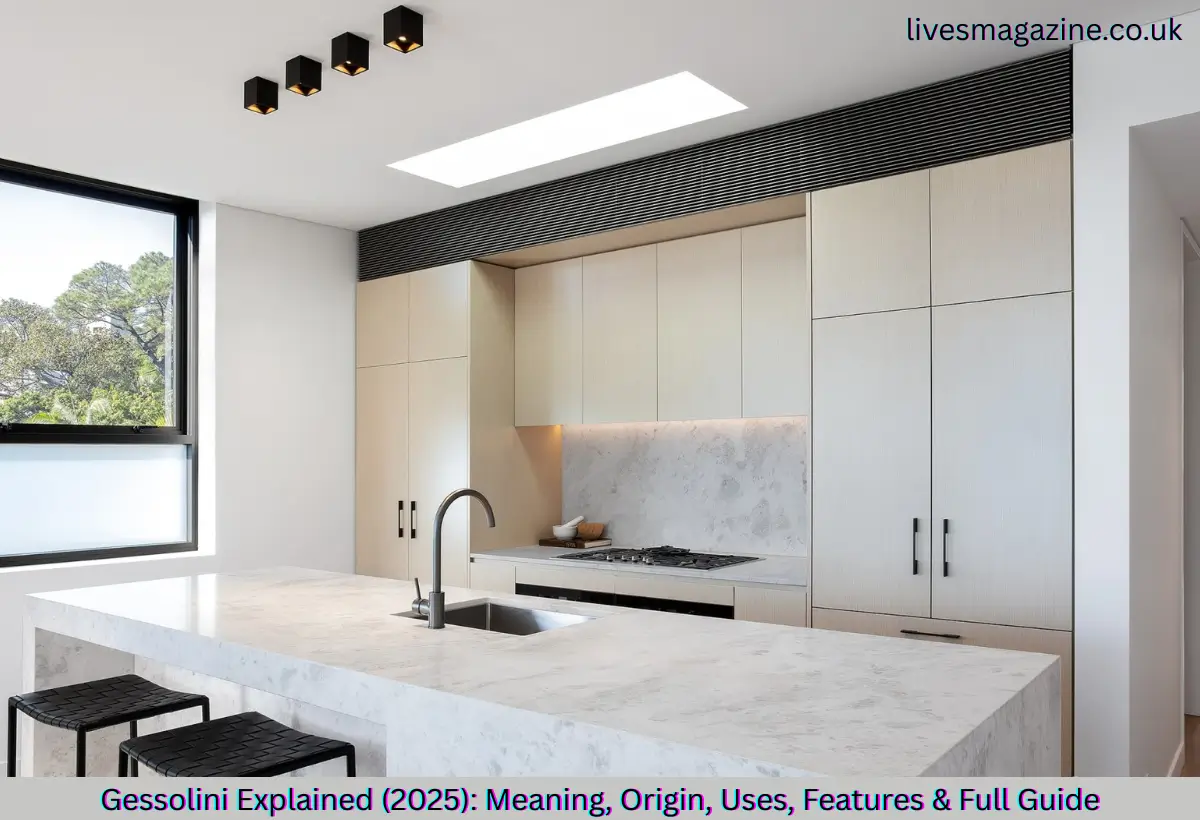
What Is Gessolini? Complete Overview
Gessolini is a modernized, artisanal variant of traditional gesso: a ground or primer applied to rigid supports (panels, boards, walls) and canvases that creates a stable, receptive surface for paint and mixed media. Unlike industrial gesso or simple acrylic primers, Gessolini emphasizes a particular formulation and finish—often using marble dust or finely ground calcium carbonate, animal or natural binders (or high-quality acrylic binders when needed), and carefully selected pigments to achieve controlled texture, absorbency and color.
Key characteristics:
- Textural depth — slightly gritty or toothy surface that holds fine brushwork and impasto.
- Durability — mineral fillers (marble dust) and proper layering make it long-lasting.
- Versatility — compatible with oils, egg tempera, certain fresco techniques, mixed media and some modern acrylics when prepared correctly.
- Aesthetic warmth — subtle colorations and tactile finishes that are hard to reproduce with synthetic primers.
Gessolini sits between craft and conservation: it honors classical techniques while adapting them for contemporary art, interiors, and sustainable practice.
The Origin and Background of Gessolini
Gessolini’s lineage is rooted in gesso, the traditional ground used by Renaissance panel painters. Historically, gesso was composed of calcium sulfate (gypsum) or calcium carbonate (chalk), mixed with animal glue; it provided a rigid, white ground ideal for egg tempera and later oil painting on panels.
How Gessolini evolved
- Ancient practices: Egyptians and classical painters used lime or gypsum washes to prepare surfaces.
- Renaissance refinement: Artists in Italy refined gesso recipes (multiple thin layers of animal glue + whiting or chalk), producing the smooth, durable grounds seen under icons and panel paintings.
- Modern reinterpretation: Contemporary makers and designers reworked the recipes—adding marble dust, altering binder ratios, and blending pigments—to achieve specific textures and aesthetic effects. The term “Gessolini” describes this modern, tactile take on gesso: more textured, more customizable, and often marketed in art and design contexts as both material and style.
Culturally, the resurgence of interest in tactile, handcrafted materials—coupled with sustainability concerns—helped Gessolini reenter the contemporary toolbox for artists and designers.
How Gessolini Works (Beginner-Friendly Explanation)
Core Mechanism or Concept
Gessolini functions as a ground: it sits between the support (wood panel, canvas, wall) and the paint layer. Its composition controls how the paint adheres, how pigments sit on the surface, and how light interacts with the artwork.
- Absorbency is tuned through binder ratios—more binder equals less absorbent, which suits oils; more mineral filler increases tooth for pastes and detailed brushwork.
- Texture is created by grain size (marble dust vs. chalk) and application tools (brush, trowel, palette knife).
- Color can be subtly introduced in the ground, creating warmer or cooler undertones that influence the final palette.
Components, Structure, or Framework
Typical components include:
- Mineral filler: calcium carbonate (chalk), marble dust, or whiting—provides body and opacity.
- Binder: historically rabbit-skin glue; modern alternatives include acrylic polymer emulsions for flexibility and moisture resistance.
- Pigments (optional): natural earths or synthetic pigments to tint the ground.
- Additives (optional): preservatives, wetting agents, or micronized fibers to improve crack resistance.
A typical layer system follows: support → sizing (if wood) → 3–8 thin Gessolini layers (sanding between some layers) → final texture/finish → paint layer.
Real-World Functionality
- On a wood panel used for tempera or oil, Gessolini provides a hard, stable base that minimizes cracking and supports fine details.
- On a wall or plaster, it becomes a decorative textured finish that accepts washes, glazes, or direct painting.
- In furniture and product design, Gessolini surfaces offer tactile finishes that age well.
Key Features of Gessolini (2025 Updated Breakdown)
Primary Features
- Controlled tooth and texture for detail or impasto.
- Customizable tint—grounds can be prepared in warm or cool tones to alter perceived colors.
- Durability when properly layered and cured.
- Eco-friendly potential when using natural binders and locally sourced mineral fillers.
Technical Characteristics
- Porosity: adjustable to favor oil or water-based media.
- Flexural compatibility: more flexible binders reduce cracking on canvas; rigid grounds suit panels.
- Abradability: some formulations accept scraping and reworking, making them useful for mixed media.
Unique Qualities
- Tactile presence: adds a haptic element to visual art and interiors.
- Historic resonance: references classical art while being modern in application.
- Hybrid use: can be an art ground, an architectural finish, or a decorative product.
Modern Improvements & Updates
- Replacing animal glues with acrylic emulsions for climate stability.
- Use of micro-polymers and nano-fillers for crack resistance.
- Pre-mixes and premade tubs available for designers who want the effect without recipe work.
Main Uses of Gessolini Across Different Industries
Business & Corporate Use
Design studios and branding agencies use Gessolini finishes in high-end retail spaces, flagship stores, and corporate lobbies to confer an artisanal, premium feel. Panels or wall treatments finished with Gessolini are chosen for galleries, hospitality interiors and showrooms.
Technology or Software Use
While not a tech material itself, Gessolini appears in UX and physical product prototypes where tactile feedback is part of the product experience—think premium device casings, limited edition hardware finishes, or AR installations combining textured panels with projection mapping.
Creative or Lifestyle Usage
Artists use Gessolini for paintings that benefit from texture and longevity. Makers use it for ceramic-like finishes on wooden furniture, bespoke picture frames, and mixed-media sculpture. Lifestyle brands use Gessolini effects in product photography backgrounds to elevate visual storytelling.
Academic or Research Relevance
Conservation and material science programs study Gessolini-type grounds to understand long-term behavior, particularly where historical techniques meet modern binders. Museums test compatibility with conservation protocols to ensure reversible and stable treatments.
Consumer-Level Applications
For DIY and craft markets, simplified Gessolini mixes are sold as decorative plasters or art primers. Makers apply them to home accent walls, furniture upcycling, and custom decorative objects.
Gessolini in Everyday Life
Practical Examples
- A painter primes wooden panel with tinted Gessolini to create a warm undertone that glows through thin oil glazes.
- An interior designer uses a Gessolini wall finish in a boutique restaurant to deepen the sensory experience—soft light plays off the textured surface.
- A maker coats an upcycled tabletop with a thin Gessolini layer, sands it smooth, then applies a satin wax finish for a tactile yet durable tabletop.
Why People Use It
- To achieve a handcrafted look that feels authentic.
- To control the painterly surface, making brushstrokes and glazes behave predictably.
- To add longevity to works destined for collectors or public display.
- To differentiate spaces and products with a signature texture.
User Demographics
- Professional painters, restoration specialists and galleries.
- Interior designers targeting hospitality and boutique retail.
- Makers and small-batch furniture studios.
- Advanced DIYers and craft hobbyists.
Gessolini vs. Similar Terms or Competitors
| Attribute | Gessolini | Standard Acrylic Gesso | Decorative Plaster | Venetian Plaster |
|---|---|---|---|---|
| Texture control | High | Variable (often smoother) | High | Smooth to polished |
| Historical authenticity | Strong | Low | Low | Medium |
| Paint compatibility (oil) | Excellent (when sized) | Less ideal without sizing | Not ideal | Not ideal |
| Durability on panels | High | Moderate | High (for walls) | High (walls) |
| Decorative interior use | Yes | Often under paint | Yes | Yes (polished finish) |
Similar Concepts
- Gesso: the ancestor; Gessolini emphasizes texture and material nuance.
- Decorative plasters: overlap with Gessolini for walls but differ in binder and intent (plasters often focus on wall finish, not painting ground).
- Venetian plaster: polished lime plasters; share craftsmanship values but differ visually.
Why Gessolini Stands Out
Gessolini bridges artistic priming and decorative finish, enabling use as both a painter’s ground and a tactile surface finish for interiors and objects—this dual role is relatively unique.
Benefits of Gessolini
Personal Benefits
- Creative control: artists can tune absorbency and texture to support signature techniques.
- Aesthetic uniqueness: provides a handcrafted look that elevates works and interiors.
Professional Benefits
- Collector appeal: works on Gessolini often feel museum-ready due to depth and finish.
- Brand differentiation: designers and businesses gain a tactile signature that speaks to craft and quality.
Efficiency & Performance Advantages
- Longevity: proper Gessolini layers contribute to reduced flaking and improved adhesion.
- Customizability: one material for both priming and finishing reduces the need for separate products.
Challenges or Limitations of Gessolini
Known Issues
- Preparation time: traditional layering and drying times are slow—multiple thin layers are ideal.
- Skill requirement: achieving desired texture and consistency often takes practice.
- Binder sensitivity: animal glue formulations are humidity sensitive and may not suit all climates.
- Compatibility risks: mixing modern acrylic paints over animal-glue grounds can cause adhesion issues if not sized or tested.
Constraints
- Cost: high-quality marble dust and craft binders can be more expensive than mass-produced primers.
- Scalability: large commercial applications require careful formulation to ensure consistent finishes across many square meters.
How to Overcome These Challenges
- Use modern acrylic binders for humid climates or flexible supports.
- Test small samples before committing to a full panel or wall.
- Train personnel or work with experienced artisans for large projects.
- Provide clear care and maintenance instructions when used in commercial settings.
Step-by-Step Guide: How to Use Gessolini
Getting Started
- Decide the support: panel (wood), canvas, or wall. Panels are easiest for traditional Gessolini.
- Choose the binder: historic rabbit-skin glue for authenticity; acrylic emulsion for flexible or humid environments.
- Select mineral filler: marble dust for fine grit and luxury feel; calcium carbonate for smoother tooth.
- Pick pigments (optional): earth pigments for warm undertones or titanium white for brightness.
Tools or Resources Needed
- Mixing buckets and spatulas.
- Brushes, palette knives, trowels depending on finish.
- Sandpaper (fine grit) for smoothing between layers.
- Size and primer if using raw wood (hide glue or acrylic size).
Best Practices
- Layer thinly: multiple thin coats dry and cure better than a single thick coat.
- Sand selectively: sand between some layers for smoothness, but leave texture where desired.
- Cure time: allow adequate drying—depending on climate, layers can take hours to days.
- Test adhesion: if changing media (oils over acrylic grounds, for example), make test strips.
Common Mistakes to Avoid
- Applying too thickly—causes cracking and long drying times.
- Using incompatible binders—avoid mixing animal glue grounds and modern acrylic paint without testing.
- Skipping sizing on raw wood—can lead to paint bleed and deterioration.
Real-World Case Studies Featuring Gessolini
Individual Case Study: Painter’s Panel Series
An emerging painter seeking warmth in her tonal underpainting primes cedar panels with a warm-tinted Gessolini (marble dust + acrylic binder + iron oxide tint). She reports improved glaze behavior: thin oil glazes sit on the surface rather than sink, producing luminous color. Gallery reception noted the surface’s visual depth and tactile allure.
Business Case Study: Boutique Hotel Lobby
A boutique hotel commissioned textured Gessolini wall panels behind the reception desk to create a signature backdrop. The artisan applied a pigmented Gessolini, sanded select areas to reveal subtle tonal layers, and sealed the panels with a breathable wax. The lobby’s tactile backdrop became a frequently photographed feature, supporting the hotel’s branding as handcrafted and premium.
Industry Use Case: Product Prototype Finish
A hardware designer used a thin Gessolini coating on a limited-edition speaker cabinet to achieve a stone-like tactile finish without heavy weight. The result enhanced the perceived value and differentiated the product in a crowded market.
(Note: these case studies are representative composites based on common patterns in contemporary craft and design. If you need documented, named client case studies we can research verified examples.)
Expert Insights: Why Gessolini Matters in 2025
Market Trends
- Handmade & tactile: consumers and collectors increasingly value handcrafted finishes and sensory design.
- Sustainability: interest in mineral and natural materials grows as brands seek lower-toxicity, longer-lasting finishes.
- Experience economy: businesses use materiality to create memorable retail and hospitality environments.
Consumer Behavior Shift
Clients are paying for authenticity—not just look, but the story behind materials. Gessolini’s link to historical craft resonates with premium buyers.
Future Demand Forecast
While exact numbers are context dependent, demand for artisan finishes in high-end interiors and limited edition products is expected to continue rising as luxury consumers and boutique brands emphasize material storytelling.
Future of Gessolini: Predictions & Upcoming Trends
New Applications
- Hybrid architectural panels combining Gessolini finishes with structural composites.
- Wearable craft: small accessories and jewelry using micro-Gessolini surfaces in luxury goods.
- Digital fabrication combos: CNC-cut panels with Gessolini finish for precise contemporary forms.
Technological Evolution
- Improved binders and additives that reduce curing time while preserving tactile qualities.
- Color-stable pigments and UV-stable sealers for more outdoor or lit environments.
- Enhanced pre-mixed products for broader adoption in commercial settings.
Global Impact
As the technique scales, expect niche markets—boutique hotels, art restorers, and makerspaces—to adopt Gessolini as a recognized finish. Education programs may include Gessolini in conservation and material practice curricula.
FAQs About Gessolini
Q: What does Gessolini mean?
A: Gessolini is a contemporary term describing a refined, textured variant of gesso—used as a painter’s ground and decorative finish that emphasizes mineral fillers, tactile surface and often a handcrafted approach.
Q: Is Gessolini a brand or a concept?
A: Primarily a concept/technique and style. Some suppliers market premixed “Gessolini” products, but the term describes an approach rather than a single brand.
Q: Can I use Gessolini on canvas?
A: Yes—with flexible binders (acrylic emulsions) to avoid cracking. Traditional rabbit-skin glue grounds are better for rigid supports like wood.
Q: Is Gessolini suitable for oils?
A: Yes—if the ground is sized and formulated for oil painting. Always follow the “fat over lean” principle and allow the ground to cure appropriately.
Q: How long does Gessolini take to dry?
A: Drying depends on thickness, binder and climate. Thin layers can dry within hours; full curing may take days. Plan accordingly.
Q: Is Gessolini eco-friendly?
A: It can be—when using natural mineral fillers and eco-conscious binders. Avoid animal glue if you prioritize vegan or animal-free materials.
Q: Can I buy premixed Gessolini?
A: Yes—some art suppliers now offer premixed tubs or kits for decorative Gessolini finishes. DIY recipes also abound for makers who prefer control.
Final Verdict: Is Gessolini Worth Paying Attention to in 2025?
Gessolini is worth attention if you value tactile surface, craft, and an authentic link to traditional material practices. It is particularly valuable for:
- Artists seeking nuanced grounds that affect color and texture;
- Designers and brands wanting a signature, handcrafted finish in interiors and products;
- Conservators and makers exploring hybrid historic-modern techniques.
Practical considerations: Gessolini requires thoughtfulness—proper support, binder selection, and testing are essential. For large commercial projects, pilot sections and collaboration with experienced artisans will minimize risk.
Bottom line: Gessolini marries history and modern design demands. It offers aesthetic richness, material authenticity, and flexible applications across art and design—making it a compelling choice in 2025 for anyone who wants surfaces that look and feel crafted.
Read Also:- Kompama Explained (2025)