Introduction
What Are PLG Supplies?
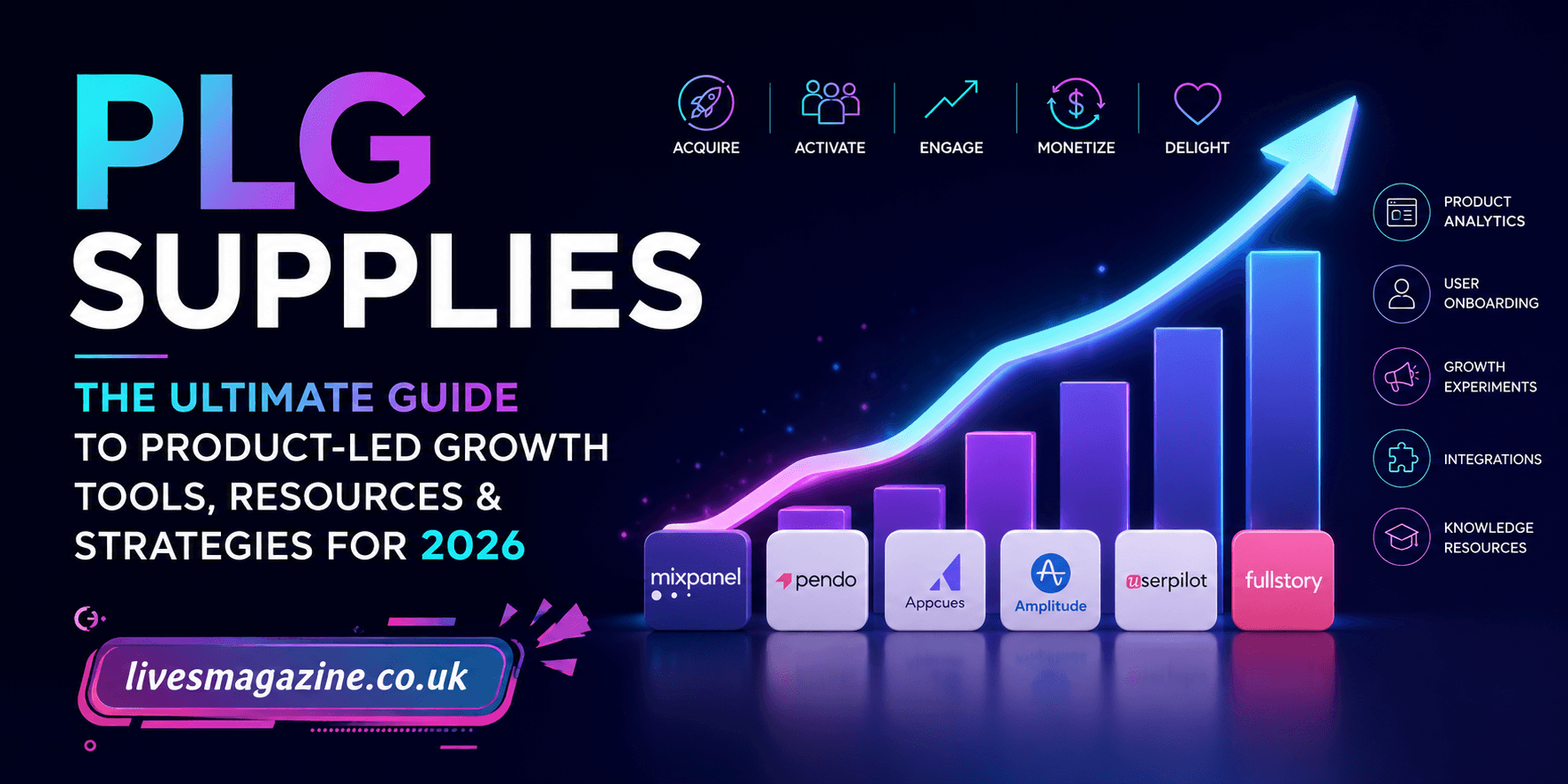
PLG supplies refer to the tools, platforms, software, physical resources, and operational systems that support a product‑led growth strategy. These are the building blocks that enable teams to measure, optimize, and scale a product so it essentially sells itself. PLG supplies include everything from onboarding platforms and analytics software to feedback gathering systems and internal documentation resources.
Simply put, without the right PLG supplies, delivering a seamless product experience — the heartbeat of PLG — becomes extremely difficult.
Why PLG Supplies Are Essential for Modern Businesses
As the market evolves, users no longer tolerate friction in evaluating and adopting new tools. In fact:
- 87% of SaaS companies now deploy a free trial or freemium option to support self‑serve discovery.
- PLG companies grow 30–40% faster than traditional sales‑led competitors, while reducing customer acquisition cost (CAC) by up to 50–70%.
These figures underline how critical PLG supplies are to operational performance — they help companies scale growth while reducing overhead, improving retention, and increasing customer lifetime value.
How PLG Supplies Support Product‑Led Growth
PLG supplies work across the full customer journey:
- Acquisition: tools that attract signups and enable frictionless onboarding
- Activation: systems that help users reach their first success milestone
- Retention: analytics and automation that keep users engaged
- Expansion: insight tools that identify upsell and cross‑sell opportunities
From analytics platforms to communication tools, each supply empowers teams to understand user behavior, reduce churn, and deliver continual product value.
Understanding Product‑Led Growth (PLG)
What is PLG?
Product‑Led Growth is a revenue strategy where the product itself becomes the main driver of user acquisition and revenue growth, often bypassing traditional sales-centric models. In PLG, users experience value directly through:
- Free trials or freemium access
- Self‑serve onboarding with minimal human intervention
- Contextual in‑product guidance and personalized experiences
- Viral sharing features built directly into the product experience
Unlike traditional models, PLG puts user experience first, with every decision centered around helping users quickly understand and achieve value.
Key Benefits of a Product‑Led Growth Strategy
Product‑Led growth delivers measurable business advantages:
- Lower CAC: Up to 50–70% reduction versus sales‑led approaches.
- Higher Growth Rates: 30–40% faster revenue growth.
- Self‑Service Adoption: Users expect to try before they buy.
- Greater Retention: Improved retention due to better product experiences and faster time to value.
Brands like Slack, Dropbox, Notion, and Zoom famously built their growth engines around PLG principles, becoming household names without scaled sales teams.
PLG vs Traditional Sales‑Led Models
| Feature | PLG | Sales‑Led |
|---|---|---|
| Acquisition | Product experience | Sales outreach |
| Onboarding | Self‑serve | Demo + hand‑holding |
| Cost per Acquisition | Lower | Higher |
| Scalability | Easier | Harder |
| Time to Value | Faster | Slower |
PLG shifts emphasis from selling through persuasion to delivering value through product experience, making it more efficient and scalable for many SaaS and digital businesses.
Types of PLG Supplies
PLG supplies span a broad range of categories. Let’s explore the essential types.
Physical & Operational Supplies
Even in digital PLG models, certain physical and operational supplies support seamless workflows:
- Reliable hardware: Efficient computers and servers
- Documentation tools: Notebooks, whiteboards, planning tools
- Collaboration tools: Zoom, Slack
- Storage & backups: Cloud and physical data storage
These underpin the digital systems that run PLG products and ensure teams can collaborate efficiently.
Digital Tools & Software for PLG
Software is the cornerstone of most PLG strategies. The essential categories include:
1. User Onboarding & Engagement Tools
These help users reach their first moment of value — the critical “aha moment.” Tools in this space include interactive onboarding, checklists, tooltips, and contextual guidance. Examples:
- Appcues: no‑code onboarding flows
- Userpilot: product tours + segmentation
- Chameleon: customizable user guidance
2. Product Analytics Platforms
Analytics tools allow teams to understand how users interact with the product, which features drive success, and where users drop off. Core platforms include:
- Mixpanel – event‑based analytics
- Amplitude – behavioral cohort analysis
- Heap – automatic interaction capture
Analytics is so critical that the PLG analytics tools market is projected to grow from USD 6.5B in 2025 to USD 27.5B by 2035 — showing huge investment and adoption.
3. Customer Communication & Messaging Tools
In‑product communication ensures users get the right message at the right time:
- Intercom – in‑app chat & support
- Pendo – analytics + in‑app guides
- Drift – conversational marketing
4. Customer Support & Self‑Service Tools
PLG emphasizes automated support and knowledge bases to reduce friction:
- Zendesk – scalable support platform
- Freshdesk – flexible support tools
- AI bots and contextual help systems
5. Feedback & Voice‑of‑Customer Tools
Feedback systems help teams prioritize improvements:
- Typeform – customer surveys
- Canny – feature request tracking
- Survicate – in‑app survey tools
6. Growth Automation Software
Tools like Zapier and Segment help stitch PLG supplies into a cohesive, automated ecosystem, improving workflow efficiency and minimizing manual effort.
Analytics & Data Infrastructure
PLG relies heavily on data pipelines and analytics infrastructure to measure key performance indicators such as activation rates, retention, engagement, and churn. These infrastructures include:
- Data lakes & warehouses
- Event tracking systems
- Real‑time dashboards
Advanced analytics in PLG aren’t optional — they enable experimentation, optimization, and precise growth decisions.
Essential PLG Supplies to Get Started
Embarking on a PLG journey can feel overwhelming. Here are the foundational supplies you should consider.
Must‑Have Tools for Product Teams
- Product analytics (Mixpanel, Amplitude)
- In‑app guidance (Appcues, Userpilot)
- Feature engagement tracking
These enable teams to build and iterate based on actual user behavior.
Must‑Have Tools for Marketing Teams
- Messaging tools tied to in‑product behavior
- Automation tools (Zapier, Segment)
- Feedback capture and NPS systems
Marketing teams benefit when they can tailor campaigns based on real usage data.
Must‑Have Tools for Customer Success Teams
- Support platforms (Intercom, Zendesk)
- Lifecycle email automation
- Retention insights and churn prediction
PLG supply stacks help customer success teams proactively engage users who might be at risk of churn.
Must‑Have Tools for Growth & Revenue Teams
- Experimentation platforms
- Cohort analysis
- Product qualified lead (PQL) scoring systems
Growth teams use these to optimize conversion funnels and accelerate revenue expansion.
How to Build the Right PLG Supply Stack
Building a PLG stack is about strategic alignment, not tool abundance.
Factors to Consider When Choosing PLG Supplies
Key considerations include:
- Alignment with growth stage
- Integration capabilities
- Ease of use and onboarding speed
- Clear pricing that scales with usage
Your goal isn’t to have more tools — it’s to have the right set of tools working in harmony.
Integration & Compatibility with Existing Systems
Choose supplies that plug into your existing ecosystem (CRM, data warehouse, support tools). Fragmentation kills productivity and can lead to data silos.
Budgeting & ROI Considerations
While PLG supplies can require investment, the ROI often far outweighs costs due to:
- Reduced CAC
- Faster time‑to‑value
- Improved retention and revenue growth
Tools like Mixpanel offer free tiers to help early‑stage teams get started before scaling up.
Benefits of Investing in High‑Quality PLG Supplies
Enhanced Productivity & Efficiency
Investing in high‑quality supplies reduces manual work, improves collaboration, and accelerates delivery cycles.
Improved Customer Experience & Retention
Products that onboard users faster with less friction naturally have higher retention and engagement rates.
Operational Reliability & Safety
Quality tools reduce failures and ensure consistent performance across teams and user journeys.
Managing PLG Supplies Efficiently
Efficient management ensures your supplies remain relevant and cost‑effective.
Inventory & Resource Management
Track tool usage, license counts, and redundancy. Remove supplies that are underutilized to avoid unnecessary costs.
Audits & Usage Tracking
Quarterly audits help identify gaps and redundancies in your PLG stack, ensuring you stay lean and effective.
Workflow Automation
Automate repetitive tasks (data syncing, onboarding triggers, notifications) to focus teams on strategic work.
Sustainability and Eco‑Friendly PLG Supplies
Sustainability isn’t just a buzzword — it’s a competitive differentiator.
Durable & Reusable Materials
Choose supplies and tools designed for long‑term use and low replacement.
Eco‑Friendly Tools & Practices
Where possible, select platforms with carbon‑neutral hosting, efficient algorithms, and reduced resource consumption.
How Sustainability Boosts Brand Reputation
Consumers and enterprise customers increasingly care about sustainability. A green PLG stack can enhance brand value and trust.
Future Trends in PLG Supplies
AI‑Powered Tools & Personalization
AI is enabling predictive personalization, real‑time cohort analysis, and adaptive onboarding experiences. These advancements will continue to expand PLG capabilities.
Market Growth Projections
The PLG analytics tools market alone is projected to grow from USD 6.5 billion in 2025 to USD 27.5 billion by 2035 — underscoring the massive opportunity ahead.
IoT & Smart Inventory Management
As PLG expands into digital‑physical hybrid products, smart inventory and connected data systems will become essential.
Product‑Led Sales (PLS) Integration
The future will blend PLG and traditional sales into cohesive strategies, leveraging product data to inform targeted sales efforts.
Common Mistakes to Avoid with PLG Supplies
Tool Overload & Complexity
More tools don’t equal better results. Focus on quality, not quantity.
Ignoring User Feedback
Failing to integrate feedback loops results in missed growth opportunities.
Data Silos
Fragmented data creates mismatches in user insights and drives poor decisions.
Conclusion
PLG supplies are more than just tools — they are the foundation of a scalable, user‑centric growth strategy. When chosen and implemented thoughtfully, PLG supplies help you reduce acquisition costs, increase user engagement, optimize workflows, and deliver value to every user at every stage of their journey.
Read More: Tonghou