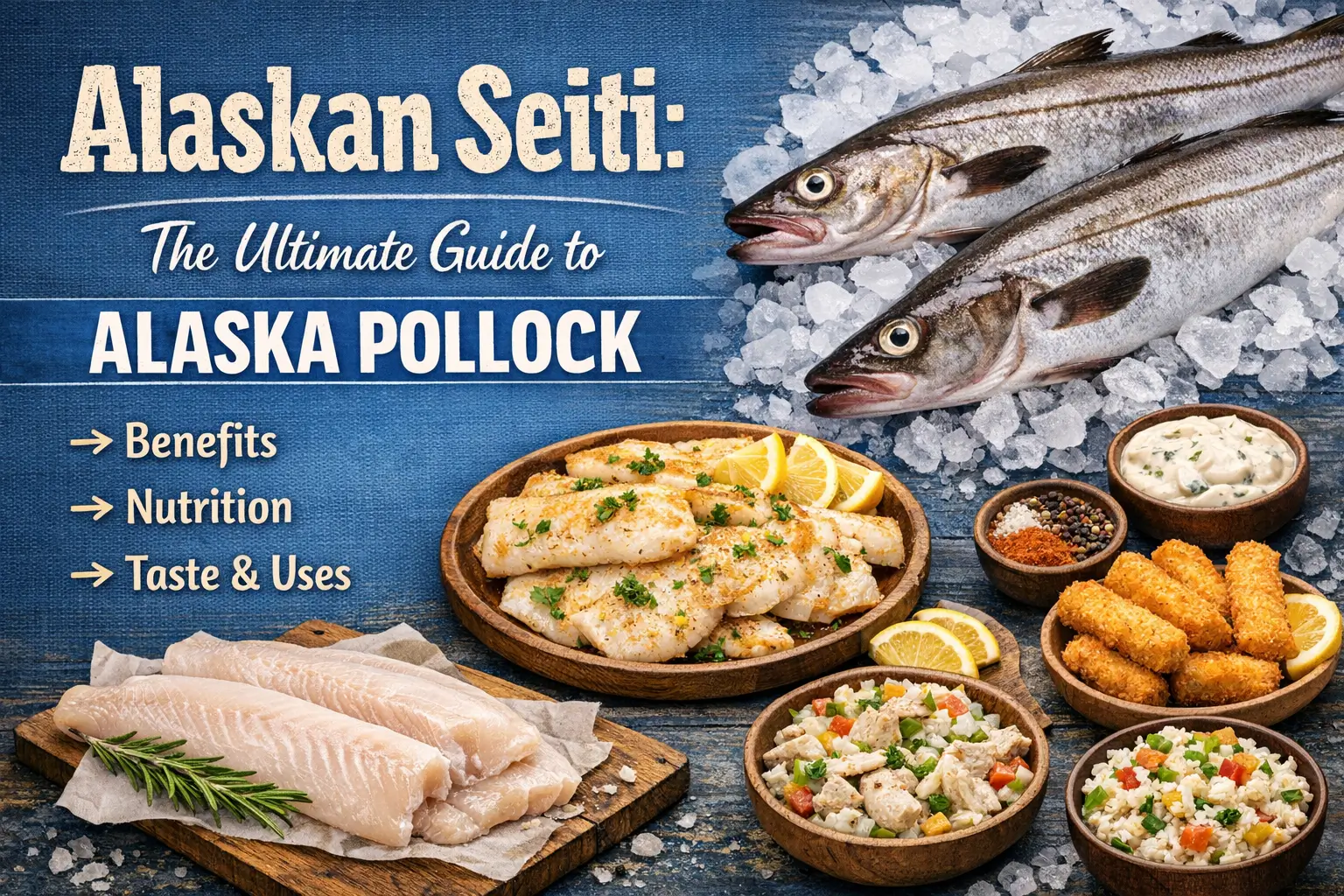
What Is Alaskan Seiti?
“Alaskan Seiti” is a commercial/marketing name sometimes applied to Alaska pollock (scientific name Gadus chalcogrammus, formerly Theragra chalcogramma). It’s not a distinct species — it’s a label used to emphasize origin or to brand processed products such as fillets, portions, or surimi (imitation crab). The fish itself is a midwater schooling species from the North Pacific, prized for its neutral taste and snow-white flesh.
Is Alaskan Seiti the Same as Alaska Pollock?
Yes. When you read “Alaskan Seiti” on packaging or menus, treat it as Alaska pollock: the same species, the same flavor profile, and the same culinary uses. The different name is marketing — often meant to reassure consumers about Alaskan origin and responsible sourcing.
Scientific Classification of Alaskan Seiti
- Common names: Alaska pollock, walleye pollock, Alaskan Seiti (market name)
- Scientific name: Gadus chalcogrammus (synonym Theragra chalcogramma).
- Family: Gadidae (the cod family) — which explains its similarity to cod in texture and cooking behavior.
Where Does Alaskan Seiti Come From?
Alaska pollock thrives in cold, nutrient-rich waters across the North Pacific: the eastern Bering Sea, the Gulf of Alaska, and coastal waters from Alaska to northern Japan and Russia. The eastern Bering Sea is the powerhouse: U.S. fisheries there account for the vast majority of American pollock landings. The fish forms large semi-pelagic schools and is typically found around 100–300 meters deep.
Quick fact — scale of the fishery
Alaska pollock is one of the world’s highest-volume fisheries. U.S. catches average over a million metric tons annually (the Bering Sea regularly supplies most of that volume), making pollock the largest single-species fishery in the United States and one of the world’s most important fisheries by tonnage. Fisheries science and management ensure quotas are set each year based on stock assessments.
Natural Habitat and Fishing Regions
Pollock prefers cold temperatures and is adapted to the sub-arctic environment. Major harvest areas include:
- Eastern Bering Sea (largest U.S. source)
- Gulf of Alaska (smaller but significant stocks)
- Russian Far East and northern Japan waters (major international catch)
Management and monitoring differ by region, but U.S. fisheries are known for robust scientific assessments and conservative quota setting to prevent overfishing.
Is Alaskan Seiti a White Fish?
Absolutely. Alaska pollock is quintessential whitefish: pale, flaky flesh with a very mild sea flavor. It is lean (low in fat) and cooks to a delicate flake, which is why it’s widely used in everything from battered fish fillets to imitation crab (surimi). Its neutral taste makes it a top choice for cuisines and preparations that rely more on sauces and spices than on the fish’s natural flavor.
Is Alaskan Seiti Related to Cod?
Yes. Pollock belongs to the same family as cod (Gadidae), which is why it often substitutes for cod in recipes. Compared with Atlantic cod, pollock is usually slightly milder and more affordable, though both share similar flaky textures and culinary roles.
Why Is It Called “Alaskan Seiti”?
The term “Seiti” is a branding/market name that highlights an Alaskan origin — “Alaskan Seiti” suggests wild-caught Pollock from Alaskan waters. Food marketers use such names to signal higher perceived quality or ethical sourcing to consumers who prioritize origin or sustainability. The biological identity doesn’t change — it’s still Alaska pollock.
Taste Profile of Alaskan Seiti
- Flavor: Very mild, slightly sweet marine notes — not “fishy.”
- Aroma: Subtle; fresh fillets smell clean (not pungent).
- Mouthfeel: Soft, flaky, and delicate after cooking.
Because of this gentle profile, Alaskan Seiti adapts seamlessly to bold seasonings (curries, blackening spices) or delicate pairings (lemon-butter sauces, simple herbs).
Texture and Appearance After Cooking
Cooked pollock flakes into large, moist pieces with a snowy white color. Unlike oily fish, it doesn’t leave a heavy mouth-coating — it feels light and clean, which is why it’s favored for family meals, fish sandwiches, and mixed dishes where the fish must complement other ingredients.
Nutritional Value of Alaskan Seiti
Alaska pollock is a highly nutritious, low-calorie protein source. Typical values (per 100 g cooked) approximate:
- Calories: ~67–111 kcal (varies by source and cooking method).
- Protein: ~17–23 g — very high relative to calories.
- Fat: ~0.8–1.5 g — very low overall.
- Omega-3s: Roughly 400–500 mg per 3 oz (85 g) cooked serving (good for heart and brain health).
- Vitamins & minerals: B12, selenium, phosphorus, potassium, trace iodine.
Short practical takeaway: Alaskan Seiti is lean, protein-rich, low-calorie, and supplies meaningful omega-3s — a smart choice for balanced diets.
Calories, Protein, and Omega-3 Content
A commonly cited figure from industry and nutrition profiles: a 3-ounce (85 g) cooked portion usually provides between 400–500 mg of omega-3 fatty acids, depending on exact cut and cooking method. That’s comparable to many lean whitefish and makes pollock a useful regular source of omega-3s without the higher fat/calorie load of oily fish like salmon.
Health Benefits of Alaskan Seiti
- Lean high-quality protein: Supports muscle repair, satiety, and weight management.
- Omega-3 fatty acids: Contribute to cardiovascular and neurological health.
- Low in contaminants: Wild-caught pollock from Alaskan waters typically shows low mercury and contaminant levels compared to larger predatory fish. U.S. management and monitoring help keep levels low.
- Micronutrients: Good source of vitamin B12, selenium and potassium for metabolic and immune health.
Because it’s low in fat and calories while high in protein, pollock is a great choice for weight-loss-friendly meals and family-friendly menus.
Is Alaskan Seiti Good for Weight Loss?
Yes. Because it’s low-calorie and protein-dense, Alaskan Seiti helps keep calories down while providing the protein needed to maintain muscle mass and feel full. Pair it with vegetables and whole grains for balanced, nutrient-rich meals.
Is Alaskan Seiti Safe to Eat Regularly?
Generally yes — when sourced from responsibly managed Alaskan fisheries (MSC-certified or U.S. managed stocks), pollock is considered safe for regular consumption, including for many pregnant people and young children — though pregnant folks should always consult local dietary guidelines and healthcare providers for individualized advice. Regular monitoring and conservative quota management help keep contaminant risks low.
Sustainability of Alaskan Seiti Fisheries
One of the biggest selling points of Alaska pollock is sustainability. U.S. pollock fisheries are managed under science-based quotas, stock assessments, and strict regulations to avoid overfishing. Many Alaska pollock fisheries — notably Gulf of Alaska and Bering Sea sectors — carry Marine Stewardship Council (MSC) certification and are recognized for responsible practices. Independent groups often cite Alaska pollock as a model for large-scale sustainable fisheries.
Quick numbers & context
- Annual U.S. catches average around 1.2–1.3 million metric tons, with the bulk from the eastern Bering Sea. Global catches (including Russia) push total pollock catches into the multi-million-ton range annually. Management agencies adjust annual quotas based on scientific stock assessments to ensure long-term sustainability.
How Alaskan Seiti Is Harvested and Processed
Modern fleets use quota-controlled, regulated fishing methods to harvest pollock. Many vessels process and freeze fish at sea (“frozen-at-sea” or “flash freezing”), which locks in freshness, texture, and nutrients immediately after catch. Processing may include filleting, portioning, or making surimi (the processed paste used in imitation crab and many convenience seafood items). Quick processing and cold-chain handling preserve quality for global export.
What Is “Frozen at Sea” Technology?
Frozen-at-sea means the catch is rapidly frozen on board the fishing vessel soon after capture. This reduces spoilage and maintains firmness and flavor. Many premium processors and markets prefer frozen-at-sea pollock because it arrives to retailers in near-fresh condition. The method also improves shelf life and ensures better texture compared with fish that’s frozen after long transit times.
Common Culinary Uses of Alaskan Seiti
Alaska pollock’s mildness and flaky texture make it a kitchen workhorse:
- Fillets — baked, pan-seared, or battered & fried (classic fish-and-chips).
- Portions — breaded fish portions for quick family meals.
- Fish sticks & nuggets — school lunches and convenience foods.
- Surimi / imitation crab — sushi, salads, sticks, and processed seafood.
- Stews, curries, chowders — the fish holds shape but adopts flavors well.
- Tacos & sandwiches — mild flesh pairs well with bold condiments.
Alaskan Seiti in Global Cuisine
Pollock’s global reach is huge — used in North American fast food and family meals, in East Asian surimi products, and in European ready-meals. Its affordability and supply consistency have allowed manufacturers and restaurants to create countless pollock-based products for mass markets.
How to Cook Alaskan Seiti at Home
Pollock is forgiving and fast-cooking; perfect for cooks at any skill level. Basic methods:
Pan-sear (simple)
- Pat fillets dry; season with salt & pepper.
- Heat a little oil in a nonstick pan.
- Cook 2–3 minutes per side until opaque and flaky.
- Finish with lemon and parsley.
Bake (easy & hands-off)
- Preheat oven to 200°C (400°F).
- Season fillets and place in a baking dish with a splash of olive oil or butter.
- Bake 10–12 minutes depending on thickness.
Fry (crispy fish)
- Dredge fillets in seasoned flour or batter and fry 3–4 minutes per side until golden.
Steam (light & healthy)
- Steam fillets with ginger and scallions for an Asian-inspired dish.
Tips:
- Pollock cooks quickly — avoid overcooking to keep it moist.
- Use sauces and spices — the fish absorbs flavors well.
Best Cooking Methods for Beginners
Baking, pan-searing, or steaming are the easiest. Use gentle heat and short cooking times (usually under 15 minutes) because the fillets are thin and delicate.
Simple Alaskan Seiti Recipes
- Lemon-Garlic Baked Pollock — olive oil, garlic, lemon juice, parsley; bake 12 minutes.
- Crispy Pollock Tacos — battered strips, cabbage slaw, lime crema.
- Pollock Curry — coconut milk, turmeric, tomatoes, chunks of pollock simmered gently.
- Pollock Chowder — creamy, with potatoes and corn for comfort food.
(If you want, I can give step-by-step recipes for any of the above.)
How to Choose High-Quality Alaskan Seiti
At the store, look for:
- Frozen fillets: minimal ice glaze (excess ice indicates thaw/refreeze).
- Packaging: clear labeling of origin (Alaska/Bering Sea preferred) and processing method (frozen-at-sea is excellent).
- Smell: mild, ocean-fresh scent. Avoid strong fishy odors.
- Appearance: bright white flesh, no darkening or dryness at edges.
- Certifications: MSC or other credible sustainability labels for assurance.
Fresh vs Frozen Alaskan Seiti
- Frozen (flash-frozen / frozen-at-sea): often superior for texture and safety — frozen immediately retains quality.
- Fresh (never-frozen): rare for pollock in many markets due to long supply chains; when truly fresh, it can be excellent but ensure very short time-from-catch.
Most retail pollock is sold frozen and that’s fine — frozen pollock can equal or outperform “fresh” product that’s been transported long distances.
How to Store Alaskan Seiti Properly
- Frozen: keep at a consistent 0°F (-18°C). Use within package date for best quality.
- Thawing: thaw in the fridge overnight, or for faster thawing place sealed fillet in cold water. Cook within 24 hours after thawing.
- Refreezing: avoid refreezing raw fish once thawed (cook it first if you must refreeze).
- Cooked leftovers: refrigerate in airtight container and consume within 2–3 days.
Alaskan Seiti vs Cod: Key Differences
- Flavor: Pollock is milder; cod has a slightly stronger, sweeter note.
- Texture: Both are flaky; cod can be firmer.
- Price: Pollock is typically more affordable.
- Culinary role: Interchangeable in many recipes, especially where a white flaky fish is needed.
Alaskan Seiti vs Other White Fish
Compared to haddock, tilapia, or cod: pollock generally offers similar protein levels, low fat, and a milder taste. It’s often preferred for processed products (surimi, sticks) and large-scale food production because it’s abundant and consistent in quality.
Pros and Cons of Eating Alaskan Seiti
Pros
- Affordable, abundant supply.
- Mild flavor that appeals to kids and picky eaters.
- Low-fat, high-protein and good omega-3 content.
- Strong sustainability and management record for U.S. fisheries.
- Versatile in cooking and processing.
Cons
- Mild flavor may be bland if unseasoned.
- Overreliance on one species for certain products can raise ecosystem concerns if not carefully managed (which is why quota science is critical).
- Some consumers prefer the richer fats of salmon or mackerel for omega-3 intake.
FAQs About Alaskan Seiti
Q: Is Alaskan Seiti the same as Alaska pollock?
A: Yes — “Alaskan Seiti” is a market name for Alaska pollock.
Q: Is it sustainable?
A: U.S. Alaska pollock fisheries are generally considered sustainable and many are MSC-certified. Annual stock assessments guide quotas.
Q: How much omega-3 does it have?
A: About 400–500 mg per 3 oz (85 g) cooked serving is a commonly cited industry range.
Q: Is it safe for pregnant women?
A: When sourced from well-managed U.S. fisheries, pollock is low in mercury and commonly recommended as a safe seafood choice in moderation — but check local guidelines and consult healthcare providers for individual advice.
Q: Best way to cook for children?
A: Lightly baked or pan-seared fillets, or breaded mild fish sticks — keep seasonings simple for younger palates.
Final Thoughts: Is Alaskan Seiti Worth Trying?
Yes. Alaskan Seiti (Alaska pollock) is a low-cost, nutrient-rich, and sustainable whitefish that’s ideal for everyday cooking. Whether you want a quick family dinner, a healthy protein boost, or a base for international dishes — pollock adapts well, is easy to prepare, and often carries responsible sourcing credentials. If you’re building recipes, menus, or articles around approachable seafood, Alaskan Seiti deserves a front-row spot.
Read Also :- Tex9 Net