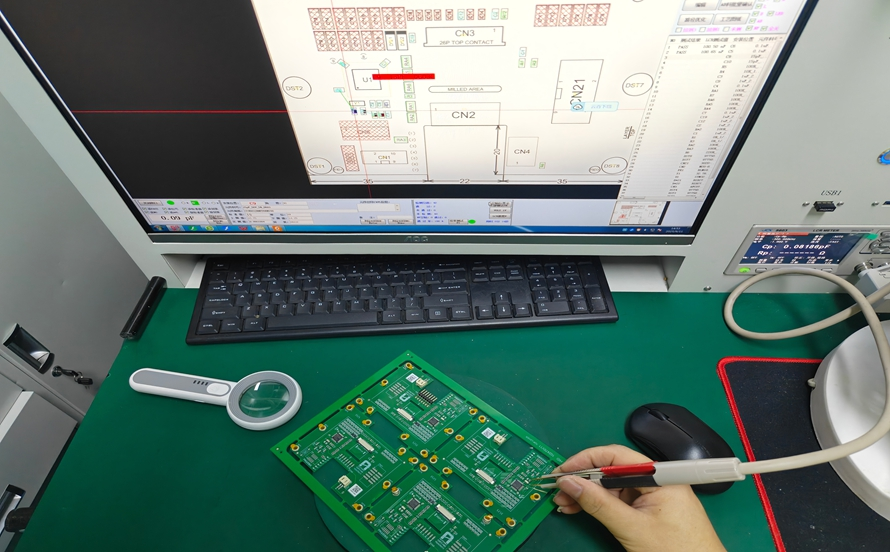
In the world of electronics manufacturing, material selection plays a critical role in determining the reliability, durability, and performance of a printed circuit board. Among all PCB substrate materials available today, the FR4 circuit board remains the most widely used and trusted option. From consumer electronics to industrial control systems, FR4 continues to dominate the market due to its excellent balance of cost, mechanical strength, and electrical performance.
If you are developing electronic products, choosing the right FR4 circuit board manufacturer is just as important as selecting the material itself. In this comprehensive guide, we will explore what FR4 is, its properties, advantages, applications, and how to select a reliable manufacturing partner.
What Is an FR4 Circuit Board?
An FR4 circuit board is a type of printed circuit board fabricated using FR4 material as the substrate. FR4 stands for “Flame Retardant 4,” which refers to a grade of glass-reinforced epoxy laminate that meets specific fire resistance standards.
The material is composed of woven fiberglass cloth impregnated with epoxy resin. This combination provides strong mechanical stability, good insulation properties, and resistance to moisture. The “flame retardant” property ensures that the board self-extinguishes if exposed to fire, enhancing safety in electronic devices.
Because of its versatility and reliability, FR4 is considered the industry standard material for most rigid PCBs.
Key Properties of FR4 Circuit Boards
The popularity of the FR4 circuit board comes from its balanced material characteristics.
One of its main strengths is mechanical durability. The fiberglass reinforcement gives FR4 excellent structural integrity, allowing it to withstand mechanical stress during assembly and operation.
Thermal performance is another important factor. Standard FR4 materials typically have a glass transition temperature (Tg) ranging from 130°C to 140°C, although high-Tg FR4 variants can exceed 170°C. This makes FR4 suitable for most general electronic applications.
Electrically, FR4 offers good insulation resistance and stable dielectric properties, making it appropriate for low- to medium-frequency applications.
Additionally, FR4 provides good moisture resistance and chemical stability, ensuring consistent performance in various environmental conditions.
Structure of an FR4 Circuit Board
An FR4 circuit board typically consists of a fiberglass epoxy substrate laminated with copper foil on one or both sides. The copper layer is etched to create conductive traces that connect electronic components.
In multilayer designs, multiple FR4 cores and prepreg sheets are laminated together to form complex layer stacks. These layers are connected through plated through-holes (PTH) or vias.
After etching and drilling, the board is coated with solder mask to protect copper traces. Surface finishes such as HASL, ENIG, or OSP are applied to improve solderability during assembly.
The result is a durable and reliable base ready for component mounting.
Advantages of FR4 Circuit Boards
One of the biggest advantages of an FR4 circuit board is cost-effectiveness. Compared to specialized high-frequency or high-temperature materials, FR4 provides strong performance at a relatively low cost.
Another major benefit is versatility. FR4 supports single-layer, double-layer, and multilayer PCB designs, making it suitable for a wide range of products.
Manufacturing availability is also a key advantage. Most PCB fabrication facilities are optimized for FR4 production, ensuring fast turnaround times and competitive pricing.
FR4 boards also offer good mechanical strength and dimensional stability, reducing the risk of warpage during assembly.
For applications that do not require extreme thermal or high-frequency performance, FR4 remains the most practical and reliable solution.
Applications of FR4 Circuit Boards
FR4 circuit boards are used in nearly every industry that relies on electronics.
In consumer electronics, they serve as the foundation for televisions, laptops, printers, and home appliances.
Industrial automation systems use FR4 PCBs in control panels, power supplies, and monitoring equipment.
Telecommunication devices such as routers, switches, and network hardware also rely on FR4 materials for stable operation.
Medical devices, including diagnostic equipment and portable healthcare monitors, frequently use FR4 boards due to their reliability and safety properties.
Even automotive electronics use FR4 boards in applications where temperature demands are within standard operating ranges.
Because of its versatility, FR4 remains the most commonly selected material for rigid PCBs worldwide.
FR4 vs. Other PCB Materials
While FR4 is widely used, it is not always the best choice for every application.
For high-frequency RF applications, specialized materials such as PTFE-based laminates may offer better signal performance.
For extreme high-temperature environments, polyimide materials may provide superior thermal stability.
However, for general-purpose electronics, FR4 delivers an optimal balance of electrical performance, mechanical strength, and cost efficiency.
This balance makes FR4 the preferred material for most standard PCB manufacturing projects.
Manufacturing Considerations for FR4 Circuit Boards
Producing a high-quality FR4 circuit board requires precise process control and material handling.
The fabrication process includes copper pattern imaging, chemical etching, drilling, plating, solder mask application, and surface finishing.
Layer alignment in multilayer FR4 boards is critical to ensure proper connectivity and signal integrity.
Thermal management during lamination must also be carefully controlled to prevent delamination or warpage.
A reliable FR4 circuit board manufacturer will implement strict quality control procedures, including automated optical inspection (AOI), electrical testing, and dimensional verification.
Consistent quality at the fabrication stage ensures smooth PCB assembly and long-term product reliability.
Choosing the Right FR4 Circuit Board Manufacturer
Selecting an experienced FR4 circuit board manufacturer is essential for achieving consistent quality and performance.
First, evaluate their manufacturing capabilities. Ensure they can produce the layer count, board thickness, and copper weight required for your project.
Second, check their quality certifications such as ISO 9001 and IPC compliance. These standards indicate a structured approach to quality management.
Third, assess their engineering support. A professional manufacturer should provide design for manufacturability (DFM) feedback to optimize your PCB layout.
Production scalability is also important. Whether you need prototypes, small batches, or large-scale production, your manufacturer should handle your volume requirements efficiently.
Finally, consider their lead times and communication responsiveness. Reliable support throughout the production process ensures timely delivery and reduced project delays.
Cost vs. Performance Considerations
FR4 circuit boards are known for offering excellent value for money. While higher-performance materials may offer specialized benefits, FR4 meets the requirements of most general electronic products at a lower cost.
Investing in a trusted FR4 circuit board manufacturer ensures that even cost-effective boards maintain high standards of quality and durability.
Low-quality fabrication can lead to assembly defects, field failures, and increased maintenance costs. Choosing the right partner reduces these risks and improves overall product success.
Conclusion
The FR4 circuit board remains the backbone of the global electronics industry. With its strong mechanical properties, good electrical insulation, flame resistance, and cost-effectiveness, FR4 continues to be the preferred material for most PCB applications.
However, the reliability of the final product depends heavily on manufacturing quality. Partnering with a professional FR4 circuit board manufacturer ensures precision fabrication, strict quality control, and consistent performance.
If your electronic project requires dependable performance at a competitive cost, choosing high-quality FR4 circuit boards from an experienced manufacturer will provide the stability and long-term value your products need to succeed in today’s competitive market.