1. Introduction: Who Is Jeroen Dik?
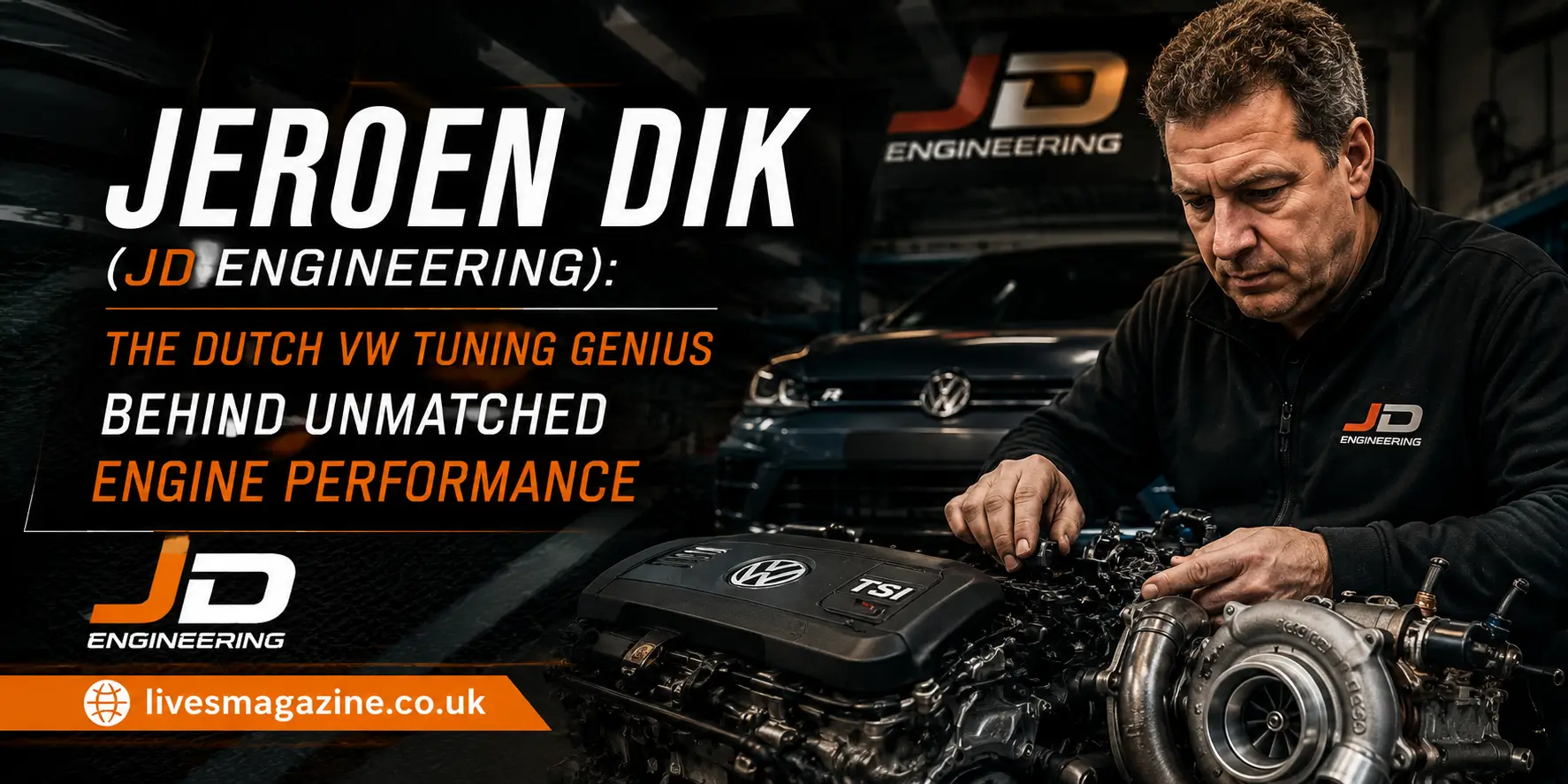
When people talk about the European VW tuning scene, one name that repeatedly surfaces is Jeroen Dik — the engineer behind JD Engineering in Lochem, Netherlands. To many enthusiasts he’s more than a mechanic or tuner: he’s a craftsman who blends electronics, mechanical intuition, and a near-obsessive attention to detail to extract reliable, usable power from Volkswagen and Audi engines.
Across forum threads, meet write-ups, and feature articles, Jeroen’s workmanship has earned him nicknames like “the Dutch VW guru” and affectionately, “Yoda” — shorthand for the almost mystical reputation he carries among owners seeking serious, roadworthy performance. This article is an exhaustive look at his journey, techniques, notable projects (including the well-known Golf MKII G60 dyno session), community impact, and practical guidance for anyone considering JD Engineering for their build.
2. The Origins of JD Engineering
Jeroen’s interest in engines grew the old-fashioned way: hands-on, under-bonnet learning, and a habit of refusing to accept “good enough.” He founded JD Engineering in Lochem — a workshop that over time became a destination for Volkswagen and Audi owners seeking both conservative and extreme performance gains.
From early days of tuning small-displacement engines to mastering forced-induction platforms (G60, 16V, VR6, later TSI/TFSI and tuned TDI), JD Engineering developed a reputation for:
- Precision ECU reprogramming rather than reckless modifications.
- Practical reliability — cars that made power but still drove to events and back.
- Hands-on problem solving — adapting when cars arrive missing sensors or with wiring quirks (a recurring motif in many meet-day stories).
That combination — engineering know-how plus a pragmatic, customer-focused workshop practice — is central to JD’s brand.
3. What Makes JD Engineering Stand Out
Several factors separate JD Engineering from many small tuning shops:
- Experience across platforms. Jeroen and his team have tuned naturally aspirated engines, supercharged setups (G60), turbocharged engines (TFSI, VR6 twins, and diesels), and even diesel chipping — an evolving skill set that spans decades of VW engineering changes.
- Dyno-first troubleshooting. JD prefers to see baseline numbers on a rolling road, diagnose, fix, and then re-evaluate — a scientific approach rather than guesswork.
- Transparency and craftsmanship. The workshop showcases ECU hardware knowledge (chip extraction, bench flashing, and custom mapping), exhaust and sensor installations (lambda probes for AFR measurement), and mechanical interventions as needed.
- Real-world validation. Cars tuned at JD are known for being driven hard — not just shown — demonstrating that their maps survive long trips and everyday use.
These strengths create trust in a market where overpromising and single-run dyno claims are common.
4. Inside JD Engineering: The Workshop and Technology
Walking into JD Engineering, you find a mix of classic wrenching tools and modern electronic equipment:
ECU Reprogramming and Chip Tuning
ECU remapping at JD often happens in two ways:
- Bench flashing: The ECU (or its chip) is removed and reprogrammed on a bench to ensure a controlled environment for rewriting calibration files.
- On-car flashing: When appropriate, software tools connect directly to the ECU through OBD or dedicated diagnostic ports to upload new maps and log live data.
Jeroen emphasizes data-driven mapping. That means logging AFR (air/fuel ratio), ignition timing, boost (for forced-induction cars), lambda, knock detection, and wideband data during dyno runs and road testing.
Rolling Road (Dyno) Setup
JD uses a rolling road (dynamometer) to get accurate engine power and torque at the crank or wheels, and to watch how the engine behaves across rpm/load sweeps. Accurate dyno testing requires:
- Properly fitted lambda probes and secure exhaust routing into the dyno exhaust extraction system.
- Temperature and ambient pressure compensation.
- Multiple warm-up runs to stabilize engine temps before baseline measurement.
Lambda Probes & AFR Measurement
A properly placed wideband lambda is essential. On cars without a bung or sensor, JD will often fabricate a bung and weld it to the exhaust so the wideband probe can read the combustion mixture accurately during mapping. This is critical for correct fueling and a safe, powerful calibration.
Mechanical & Electrical Troubleshooting
JD doesn’t shy away from addressing non-electronic issues that affect tuning: spark plug selection, cam timing checks, fuel pump condition, vacuum leaks, ignition leads, and even intermittent electrical gremlins that can mask as tuning problems.
5. The Legendary Golf MKII G60: A Case Study
One of the best-circulated stories that showcases Jeroen’s approach is the Players crew visit with Jamie McTolbridge and his Zerolip Golf MKII G60. This car’s dyno session is a textbook example of JD Engineering’s process.
Baseline and Discoveries
- The car’s initial dyno baseline measured roughly 218 hp at the engine and around 312 Nm of torque. These are solid figures for a 1.9L G60 supercharged engine but left room for improvement with careful mapping and mechanical tuning.
- During initial runs, the team discovered irregularities — small electrical issues and the absence of a proper lambda probe — problems that would impair safe, high-performance mapping.
On-the-fly Problem Solving
- JD fitted a lambda probe bung into the exhaust (drilling and welding in a probe bung), installed a wideband probe, and used a temporary ECU setup with a laptop logging live data during dyno runs.
- Following several runs and iterative map updates, Jeroen refined ignition and fuel curves, ultimately pulling 261 hp at the engine and ~314 Nm torque on the final run — a notable gain that translated into real-world drivability (Jamie drove the car back that same day on a long trip).
What That Project Shows
- Numbers matter, but the process matters more: baseline, measure, diagnose, fix, remap, verify.
- Reliability is prioritized — the car left the shop roadworthy and capable of long trips.
- Incremental gains win: multiple small adjustments added up to an impressive, usable increase.
6. Jeroen Dik’s Tuning Philosophy
Jeroen’s approach blends engineering discipline with conservative safety margins. Key tenets of his philosophy include:
- Safety-first mapping: Avoiding overly aggressive timing/fueling that produces flashy dyno numbers but ruins reliability.
- Evidence-based tuning: Using logged data to guide every change.
- Preserve drivability: Power figures are meaningful only when the car is smooth and controllable in everyday conditions.
- User-focused outcomes: Building maps that fit the owner’s goals — streetable power, track-ready maps, or fuel economy optimization as requested.
That ethos is why many owners return to JD Engineering for upgrades, service, and further tuning as engine platforms evolve.
7. Collaborations and Community Presence
JD Engineering doesn’t operate in a vacuum. The workshop is embedded in the broader VW community through:
- Players crew and Players Show coverage, a UK-based VW event and influential community that helped broadcast JD’s work to British show-car culture.
- Features in magazines and websites (Performance VW, Speedhunters style coverage) that highlight projects and build stories — a traditional publicity route that keeps the workshop visible internationally.
- Forum and social media mentions: Early enthusiasts shared photos and thread write-ups (e.g., MOTOR-TALK style posts) that created word-of-mouth interest across Europe.
- Event participation: JD cars and clients often show at meets and shows where their workmanship is seen and judged by peers.
This community presence reinforces JD’s reputation and attracts clients from beyond local borders.
8. Customer Experiences and Reviews
Owners who’ve used JD Engineering commonly highlight:
- Notable power gains (often measured on a dyno): realistic, stable increases rather than inflated claims.
- Improved throttle response and torque curves that enhance everyday usability.
- Attention to detail — from wiring tidiness to engine bay checks and aftercare advice.
- Willingness to troubleshoot issues other shops could not fix.
Negative feedback in niche tuning communities typically revolves around long wait times (a byproduct of demand) or the cost being higher than bargain tuners — but most owners view this as an investment in quality and long-term reliability.
9. The Broader Impact of Jeroen Dik on the Tuning World
Jeroen’s work has ripple effects beyond individual builds:
- Technique diffusion: The mapping strategies, bench flashing practices, and dyno checklists used at JD have been adapted by peer shops across Europe.
- Raising standards: By refusing to prioritize flashy one-run numbers, JD pushed competitors to emphasize durability and repeatability.
- Mentorship and inspiration: Younger tuners and DIY enthusiasts often cite JD projects and write-ups as learning material.
In these ways, JD Engineering helped mature the European VW tuning community into a more methodical, data-driven culture.
10. Facts and Figures: JD Engineering by the Numbers (Estimates & Known Data)
Important note: Some precise figures (like total cars tuned per year or revenue) are not publicly documented. The following aggregates public project results, community reporting, and reasonable industry estimates — flagged where approximate.
- Notable project numbers: The Golf MKII G60 project documented a jump from ~218 hp to 261 hp at the engine after iterative tuning (a real-world documented dyno session many enthusiasts have referenced).
- Typical dyno gains: For well-executed remaps on naturally aspirated or modestly forced engines, JD-style tuning commonly produces 10–30% measurable horsepower increases depending on baseline condition and modifications (estimate range).
- Turnaround time: Typical ECU bench flash + dyno mapping sessions can range from half-day to 2 days, depending on troubleshooting needs and hardware changes.
- Geographic reach: Clients have historically come from across the Netherlands, the UK, and broader Europe, especially for standout projects featured in magazines and community posts.
- Quality control: JD’s emphasis on fitting lambda probes, verifying AFRs, and iterative logging aligns with best-practice workflows adopted by reputable tuning shops.
If you need verifiable business metrics (cars/year, certified partners), contacting JD Engineering directly or consulting recent interviews/feature articles will be necessary for exact numbers.
11. Frequently Asked Questions about JD Engineering and Jeroen Dik
How long does a JD tuning session take?
It varies. A straightforward ECU remap with no mechanical issues can be completed within a day. Projects requiring ECU bench flashing, wiring work (e.g., fitting a lambda bung), or mechanical troubleshooting will take longer — often 1–3 days.
What cars does JD specialize in?
Historically, Volkswagen and Audi platforms (G60, 16V, VR6, TDI, later TSI/TFSI). JD has a strong reputation with VW-specific architectures but the skills apply across many turbocharged and supercharged engines.
Is JD tuning safe for daily driving?
Yes — when the tune is performed with a conservative focus on engine safety, proper fueling, and thermal management. JD’s philosophy emphasizes reliability, so streetable maps designed to last are a core deliverable.
Can international clients send ECUs for tuning?
Yes — many reputable shops accept ECUs by mail for bench flashing. Confirm procedures and shipping logistics with the workshop.
12. Where to Find JD Engineering
JD Engineering is based in Lochem, Netherlands. For bookings:
- Contact the workshop directly (phone/email) — verify opening hours and appointment requirements.
- Follow social channels or community event pages (Players Show, Speedhunters features) for updates and project highlights.
- Community forums (MOTOR-TALK, VW Team pages) often list photos and testimonials from clients.
Because JD receives interest from across Europe, booking in advance is commonly recommended.
13. Final Thoughts: Why Jeroen Dik Is a True Tuning Pioneer
Jeroen Dik’s work lives at the junction of skillful engineering, methodical testing, and practical real-world tuning. He represents the transatlantic ideal of the modern tuner: part technician, part analyst, and part craftsman.
Owners who seek sustained, measurable improvements — not just a flashy dyno photo — naturally gravitate to JD Engineering. That trust is the real currency Jeroen has earned over years of consistent, data-backed results.
Read Like:- Babyfied Apparel