What Is Coloration Indigo?
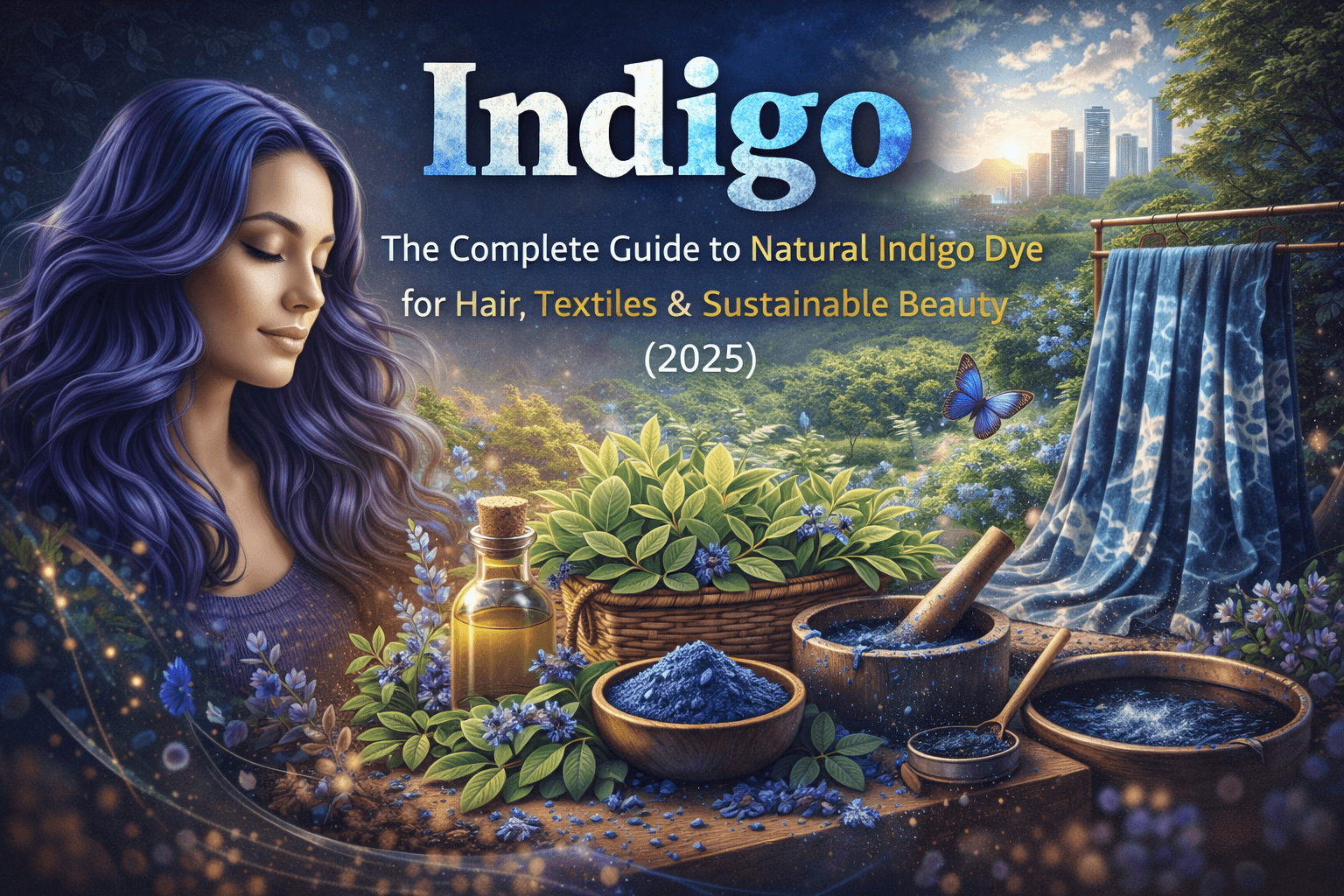
Coloration indigo refers to the traditional use of natural indigo dye, typically derived from the Indigofera tinctoria plant, to produce deep blue to blue-black shades. It includes both the dye itself and the process of applying it to hair or textiles. Indigo is a rich color positioned between blue and violet on the spectrum, valued for its depth, longevity, and cultural significance across centuries.
What Color Is Indigo?
Indigo is a deep, saturated blue that can sometimes appear almost black depending on lighting. It is darker than royal blue and more vibrant than navy. A unique aspect of natural indigo is that it changes color through oxidation, initially appearing greenish before gradually deepening into its iconic shade when exposed to air.
Why Indigo Is Different from Other Dyes
Unlike most dyes that bind instantly, indigo works through a chemical transformation known as oxidation. When applied, it looks pale or greenish but darkens over time as it reacts with oxygen. This slow process gives indigo its remarkable depth, durability, and natural fading characteristics.
Where Does Coloration Indigo Come From?
The primary source of natural indigo dye is the Indigofera tinctoria species, historically cultivated across Asia, Africa, and the Americas. The plant’s leaves contain indican, a compound that transforms into indigotin—the pigment responsible for the deep blue color—through fermentation and oxidation.
How Indigo Leaves Become Dye Powder
Traditional indigo production involves harvesting leaves, soaking them to release indican, allowing oxidation to occur, and then filtering and drying the pigment into powder form. This labor-intensive process historically made indigo extremely valuable, earning it the nickname “blue gold.”
Natural vs Synthetic Indigo
Natural indigo was once the only source of blue dye, but industrial demand led to the development of synthetic indigo in the late 19th century. While synthetic versions dominate mass production today, natural indigo remains highly valued in artisanal crafts and eco-conscious industries.
The History of Coloration Indigo
Indigo is one of the oldest dyes known to humanity, with evidence of its use dating back thousands of years in regions like ancient Peru, Egypt, India, and China. It played a major role in global trade and cultural identity, often symbolizing wealth and prestige due to its rarity and production difficulty.
Indigo as Blue Gold
Because of its complexity and cost of production, indigo became known as “blue gold” and was traded extensively across ancient routes connecting Asia, Europe, and the Middle East, shaping economies and cultural exchanges.
The Indigo Revolt and Colonial Era
During the 19th century in India, indigo farming became associated with colonial exploitation, leading to the historic Indigo Revolt, where farmers resisted forced cultivation under oppressive systems.
Indigo in Global Trade
With the rise of synthetic dyes, natural indigo declined in industrial use. However, traditional practices such as Japanese indigo dyeing continue to preserve its cultural legacy.
Coloration Indigo in Textiles and Fashion
Indigo has long been used to dye fabrics like cotton, wool, and silk. Its unique bonding process allows color to sit on the fiber surface, creating distinctive fading patterns over time.
Why Denim Is Dyed with Indigo
Indigo is especially suited for denim because it adheres to the outer layer of cotton fibers, allowing jeans to develop unique wear patterns. This characteristic is why blue jeans age beautifully and gain character with use.
Indigo in Traditional and Artisan Fabrics
Across regions like West Africa, Japan, and South Asia, indigo dyeing is deeply embedded in traditional craftsmanship, often involving intricate resist-dyeing techniques and symbolic patterns.
Indigo in Modern Sustainable Fashion
Today, natural indigo is gaining popularity among sustainable fashion designers who value its plant-based origin and minimal environmental impact compared to synthetic dyes.
Coloration Indigo for Natural Hair Coloring
Indigo is also widely used as a natural hair dye, offering a chemical-free alternative to synthetic coloring products.
What Is Indigo Hair Dye?
Indigo hair dye is made from finely ground leaves of Indigofera tinctoria. When mixed with water, it forms a paste that can color hair in shades ranging from brown to deep black.
Why Indigo Is Rarely Used Alone
On its own, indigo can produce blue or greenish tones, especially on lighter hair. Therefore, it is commonly paired with Lawsonia inermis (henna) to create balanced, natural-looking brown and black shades.
The Role of Henna in Indigo Hair Coloring
The typical process involves applying henna first to create a warm base, followed by indigo to darken and neutralize the tone. This two-step method allows for a wide range of natural shades.
Who Should Use Indigo for Hair Coloring?
Indigo is ideal for individuals seeking chemical-free hair dye, natural gray coverage, scalp-friendly solutions, and eco-conscious beauty alternatives.
The Indigo Hair Coloring Process (Step-by-Step)
Hair should be clean and free of oils before application. Henna is applied first if needed, followed by indigo paste. After application, the dye oxidizes over 24–48 hours, gradually deepening in color. The entire process typically takes 1–3 hours depending on desired intensity.
Shades You Can Achieve with Coloration Indigo
Depending on the ratio of henna and indigo, users can achieve light brown, medium brown, dark brown, soft black, or deep jet black tones.
Benefits of Using Coloration Indigo
Indigo is 100% natural and free from harsh chemicals like ammonia and synthetic agents. It is gentle on the scalp, provides long-lasting color, enhances hair texture and shine, and supports environmentally friendly beauty practices.
How Coloration Indigo Works
Indigo’s coloring effect comes from the transformation of indican into indigotin through oxidation. This process allows the pigment to bind effectively to hair and fibers, creating its signature deep blue tones.
Coloration Indigo vs Synthetic Hair Dyes
Compared to synthetic dyes, natural indigo contains fewer harsh chemicals and has a lower environmental impact. While synthetic dyes may offer faster results, indigo provides a more gradual, natural-looking finish and tends to fade more gracefully.
Common Myths About Coloration Indigo
Many believe indigo turns hair blue, but when combined with henna, it produces natural shades. Others think it is unsafe or difficult to use, but pure indigo is generally safe and manageable with proper technique. It is also effective for gray coverage when applied correctly.
Precautions and Safety Tips Before Using Indigo
A strand test is essential to check results and sensitivity. Non-metallic bowls should be used to avoid chemical reactions, and care should be taken when applying indigo to chemically treated hair. Protective gloves and clothing are recommended since indigo can stain easily.
Caring for Hair After Using Coloration Indigo
Hair should not be washed for 48 hours after application to allow full color development. Using sulfate-free shampoos helps maintain color, while regular moisturizing keeps hair healthy and shiny. Touch-ups are typically needed every 4–8 weeks.
Cultural and Symbolic Meaning of Indigo
Historically, indigo has symbolized wisdom, spiritual depth, and prestige. It has been used in ceremonial clothing and cultural rituals across many societies, reflecting both artistic expression and social identity.
Why Coloration Indigo Is Still Relevant Today
As the world shifts toward sustainability, indigo stands out as a natural, eco-friendly solution in both fashion and beauty. Its plant-based origin, low environmental impact, and cultural heritage make it highly relevant in modern conscious living.
Frequently Asked Questions About Coloration Indigo
Coloration indigo can be long-lasting, especially when combined with henna. It is generally gentle on hair, though results vary depending on hair type and application method. Color typically lasts several weeks, and both mixed and two-step applications can be used to achieve different shades. It is suitable for sensitive scalps, but patch testing is always recommended.
Final Thoughts on Coloration Indigo
Coloration indigo is more than just a dye; it represents a blend of tradition, science, and sustainable beauty. Whether used in textiles or as a natural hair coloring solution, it offers a timeless, meaningful alternative to synthetic options while preserving centuries-old practices in a modern world.
Read More:- Foenegriek (Fenugreek)